

TL;DR
- Local SEO services only produce customers when tied to attribution (call tracking, UTM tags, and GA4 events), not just rankings.
- Fix Google Business Profile conversions first: description, booking link, Q&A, and photos before touching anything else.
- Service and location pages need real local proof (photos, names, outcomes), not boilerplate copy pasted across neighborhoods.
- Reviews drive human conversions; citations keep your identity consistent for search engines. Fix Google Business Profile and Google reviews first.
- Vet any local SEO agency with a 90-day pilot, raw CallRail exports, and a documented task log before signing a retainer.
- If budget is tight: DNI + GA4 events + Google Business Profile cleanup will outperform any mass citation or bulk content package.
Table of Contents

Why Most Local SEO Services Don’t Produce Customers
Local SEO services fail small businesses for one consistent reason: the work is never connected to what actually happens when a customer picks up the phone. Rankings move. Impressions grow. Calls stay flat. The gap is almost always attribution: nobody built the measurement layer that connects a Google Business Profile update or a neighborhood service page to a booked job.
This guide is built around a single standard: every tactic covered here is measurable at the lead level. If you can’t trace a change to a call, a form submission, or a booked appointment, it’s not a priority.
Step 1: Run a One-Day Local SEO Audit
Before spending money on local SEO services, spend one workday finding the handful of fixes that will move phone calls this month. The goal is a prioritized action list with owners and effort estimates, not a finished implementation.
Morning Session (90 to 120 Minutes): Fast Wins
Google Business Profile ownership: Confirm the correct account owns the Google Business Profile and no verified duplicates exist. Check Google Business Profile Help for duplicate removal steps.
Primary and secondary categories: The primary category must match customer intent. A wrong primary category suppresses relevant visibility more than almost any other single factor.
Conversion assets: Verify a visible click-to-call number, active booking link, messaging enabled, and at least five recent photos or a short video.
Google Business Profile Insights export: Pull 90 days of Google Business Profile actions and impressions now. You need a clean baseline before any changes go live.
Afternoon Session (90 to 120 Minutes): Verification and Measurement
NAP consistency spot-check: Use BrightLocal or Whitespark to pull citation snapshots and list the top 10 inconsistent entries for cleanup.
On-page triage for three priority pages: Confirm crawlable NAP, city in title or H1 where appropriate, LocalBusiness/Service schema presence, and a visible click-to-call CTA.
Speed and mobile health: Run PageSpeed Insights and identify the single biggest technical fix blocking mobile conversions.
Tracking verification: Confirm call tracking (DNI) and UTM parameters are active for Google Business Profile posts and any paid clicks. If you can’t attribute a lead, the fix didn’t count.
Example: Correct a service area that covers a whole state, set the right primary category, add project photos, and turn on booking links. Track Google Business Profile actions with call tracking and UTM tags.
Audit rule: After the audit, pick the top three items that each require less than two hours and assign an owner to each. If nothing changes in tracking within 30 days, move to the next two items on the list.
Step 2: Optimize Google Business Profile for Conversions

Treat your Google Business Profile like a landing page. Most local prospects see your Google Business Profile before they ever visit your website, and every visible field is a chance to reduce friction and prompt a call, booking, or click.
Focus on what users see on mobile first: the short description, booking button, primary phone number, and top photos. Over-optimizing hidden fields or keyword-stuffing long text blocks wastes time and looks spammy.
Google Business Profile Conversion Checklist
- Rewrite the short description for action: Lead with one line of value (who you help and what you do), then one CTA and a short tracked URL. Example: “Same-day emergency plumbing for Chicago homeowners. Book a slot today: [tracked link]”
- Use Product/Service entries as micro-landing pages: Add a starting price and a short booking link. These show prominently on mobile and convert better than a generic services list.
- Seed Q&A with conversion-ready answers: Add three authoritative Q&A entries covering what customers always ask: pricing, availability, and credentials. Include a CTA and link in each answer. Remove inaccurate community answers immediately.
- Set a messaging SLA: Enable messaging only if you can reply within one business hour. Build two templates: a quick qualifier (issue + availability) and booking-confirmation copy that moves the thread to a phone call.
- Add a booking integration with a fallback: Integrate a booking link, but keep click-to-call and a simple contact form visible for users who prefer phone.
- Tag every pathway: Create separate UTM-tagged short URLs for Google Business Profile description, product entries, Q&A links, and posts so you can attribute bookings to a specific Google Business Profile element.
What to measure: Track booking clicks, Google Business Profile appointment records, and no-show rate.
KPI to track: Google Business Profile conversion rate (bookings or calls ÷ Google Business Profile views) and average first-response time for messaging. Target response time under 30 minutes for the strongest lift.
Step 3: Build Service and Location Pages That Close
Generic location pages with repeated boilerplate copy are the most common waste of money in local SEO services. Service and location pages are commercial pages: they must answer a local intent and move a visitor to contact you.
The Hub, Spoke, and Proof Framework
Build a central service hub page that explains your offering at scale. Spoke pages live off the hub: one page per service per location. Each spoke page needs real local proof: unique project photos, client names or initials, dates, and short job outcomes. Not stock images. Not repeated paragraphs.
Each location or service page must include:
- A one-line utility statement: what you do, for whom, and where
- One local proof element: a project photo, client first name, and date
- Three to five local phrases reflecting real search intent (service + neighborhood, emergency + city, cost + city)
- A clear conversion path with a tracked phone number or booking form
- LocalBusiness and Service schema via Rank Math
Practical rule: If you have limited content resources, build three deep, proof-rich pages for your top revenue-generating neighborhoods before touching any others. Thin pages across 20 neighborhoods dilute authority and create internal competition, and they almost never generate qualified calls.
Example: Replace thin neighborhood pages with fewer pages that include job photos, a job location, LocalBusiness schema, and a unique tracking number per page. Measure calls and leads per page.
Immediate action: Audit your existing service and location pages. Keep the top 20% showing traction or unique proof. Consolidate or remove the rest. Assign one page owner to produce one new proof-based page per month.
Step 4: Build a Review Program That Drives Calls
Reviews are a conversion channel, not a vanity metric. The objective is to increase qualified calls and booked appointments by creating trust signals at the exact moment a prospect is deciding whether to contact you.
Tactical Reputation Playbook
- Ask at point of service: Collect feedback with a printed QR code on invoices and a one-click SMS link sent within 48 hours. Immediate asks produce more detailed, useful reviews than requests sent weeks later.
- Automate with personal detail: Set a reminder sequence at 48 hours, 6 days, and 14 days that includes the technician’s name and job ID. Personal detail drives credibility and review length.
- Prioritize Google, then one industry-specific platform: Pick one: Healthgrades, Houzz, HomeAdvisor, or Yelp depending on your trade. Spreading thin across too many platforms wastes effort.
- Embed reviews on-site with schema: Show recent reviews on service pages and implement aggregateRating markup so search engines can surface star snippets in results.
- Respond within 48 hours: Positive reviews: short thank-you plus one action (referral CTA). Negative reviews: acknowledge publicly, invite offline resolution, escalate internally within 24 hours.
What to measure: Count new reviews that name the job and the technician, track Google Business Profile call-through rate, and compare booked visits to the weeks you send the review asks.
Measurement that matters: Track review velocity (new reviews per month), percentage of reviews mentioning a specific service or neighborhood, and calls attributed to pages showing those reviews. For broader consumer behavior benchmarks see the BrightLocal Local Consumer Review Survey.
Step 5: Build Local Links and Clean Up Citations
Local links and clean citations are converters, not trophies. A handful of well-placed local links and a consistent citation footprint will move referral traffic and make your Google Business Profile and location pages more trustworthy to search engines. Mass directory subscriptions and paid link schemes do neither.
Citation Triage First
Run a citation audit before chasing new links. Use Whitespark or BrightLocal to find the top 10 inconsistent listings: wrong phone number, old address, duplicate business names. Fixing those entries typically produces faster, measurable improvements in Google Business Profile consistency than adding 50 low-quality new listings.
Three-step citation fix:
- Correct NAP on your primary directory entries
- Remove or merge verified duplicates
- Log where updates were made and assign a quarterly review owner
Targeted Link Framework: Relevance Over Volume
| Link Type | Effort | Value | Best For |
|---|---|---|---|
| Civic links (chamber, local news, school sponsorships) | High | High | Authority + direct referral |
| Industry portals (Houzz, HomeAdvisor, Healthgrades) | Low | Medium | Trade-specific lead capture |
| Content-driven outreach (local guides, cost checklists) | Medium | High | Scalable over time |
Example: Sponsor a local community event and publish a homeowner how-to. Ask the nonprofit sponsors page and a neighborhood blog to link to the guide. Measure referral calls and rankings for the matching neighborhood pages.
Judgment: One relevant local news mention is almost always more valuable than dozens of generic directory profiles. Prioritize links that send actual people alongside trust signals.
Step 6: Create Content That Matches Search Intent
Pages that answer the exact thing a searcher wanted (service, urgency, and location combined) are the only local pages that reliably produce calls and bookings. Generic blog posts and template location pages attract impressions. Intent-matched pages produce customers.
Four Content Pillars for Local Service Businesses
| Pillar | What It Does | Example |
|---|---|---|
| Service explainers | Answers what you do and when to call | “Emergency furnace repair Chicago” |
| Hyperlocal narratives | Real projects with local context | “Roof replacement in Lincoln Square: before and after” |
| Question clusters | Specific long-tail queries and objections | “How long does a water heater installation take?” |
| Project proof pages | Before/after with outcomes and client detail | “Bathroom remodel in Wicker Park: 3-week timeline” |
Content execution rule: Each intent-matched page needs four elements: a one-line intent statement (service + geography + urgency), one local proof element (photo, client first name, date), short answers to the top three related questions, and a tracked CTA (DNI number or UTM-tagged booking link).
Example: Map queries that pair an urgent service with neighborhood names. Build a separate page per neighborhood with its own photos, job timestamps, and tracking number. Measure calls that reach that number.
Micro-test approach: Pick two high-intent queries from Search Console, build two intent-matched pages with DNI and UTM-tracked CTAs, and compare call volume and CTR against your existing pages over 30 days. Scale the pattern that wins.
Step 7: Measure Local SEO ROI the Right Way
If you can’t attribute leads to specific local SEO work, you are budgeting in the dark. Measurement turns Google Business Profile updates, content changes, and link outreach into decisions, not guesses.
Core Measurement Stack
| What to Track | Why It Matters | How to Capture It |
|---|---|---|
| Phone calls by page and Google Business Profile post | Most local conversions start with a call; you need source-level attribution | DNI via CallRail; tag numbers by URL, Google Business Profile, and UTM |
| Form submissions and bookings | Shows intent; feeds CRM for conversion tracking | GA4 events, UTM conventions for Google Business Profile posts |
| Lead outcome and job value | Without revenue mapping you only measure volume, not ROI | CRM source fields; hand-match 30 to 60 closed jobs for the first 90 days |
Starting point for small teams: DNI + GA4 events + a simple spreadsheet to hand-match 30 to 60 closed jobs. Add full CRM mapping only after you have leads you want to scale.
Attribution Approach
Use conservative attribution. Local SEO rarely converts in a single click, so assign partial credit to Google Business Profile actions, content pages, and paid tests. Run micro-experiments: pause a Google Business Profile post for two weeks, or hold out a nearby zip code, and measure incremental calls with DNI. Use 60 to 90 day windows for baseline comparisons; shorter windows distort seasonal services.
What to measure: Record calls by tracking number, appointment and phone-click events, and bookings from each page and each Google Business Profile post next to hours spent.
Common mistake: Treating impressions and rankings as ROI. Rankings are noisy and lag revenue. Keep your dashboard focused on phone bookings and closed jobs traceable to a specific tracked page, Google Business Profile post, or campaign.

Step 8: How to Choose a Local SEO Services Provider
The right local SEO services provider proves they move paying customers to your phone and calendar, and has a repeatable, auditable process for doing it. Avoid any vendor who sells rankings or vague monthly tasks without connecting those tasks to tracked calls, booked jobs, or closed revenue.
Vendor Evaluation Framework
Ask for concrete artifacts, then verify them. Screenshots are easy to fabricate, so ask for raw exports, small-sample data access, and a live walkthrough of their actual tracking dashboard.
Eight questions to ask every candidate:
- “Can you show me anonymized call exports and booking outcomes tied to local pages or Google Business Profile posts?” Raw data, not screenshots. No data = red flag.
- “Can I see a sample month with tasks, hours, and responsible roles?” Generic deliverables like “improve citations” are meaningless without accountability.
- “Which tools do you use, and will you work inside my accounts?” BrightLocal, Whitespark, CallRail, GA4. Providers who broker access or only deliver reports create opacity and delays.
- “Who owns the content assets you produce?” You do. Get it in writing.
- “What is your exit process if I cancel?” Require a 30-day cancellation clause with full asset and login handover.
- “Who is my day-to-day contact and what are their local SEO credentials?” Weekly short updates and a monthly KPI review with raw exports should be standard.
- “How is pricing structured: retainer, performance, or hybrid?” Performance-based fees look attractive but are often narrowly defined and easy to game. A capped retainer with milestone bonuses is usually more practical.
- “Can I speak to two current clients in my niche?” Ask them how the agency handled a missed KPI. Evasive answers about churn are a deal-breaker.
What to measure: Confirm a written hour plan, raw call exports you can open yourself, and a qualified inquiry definition you can check against your bookings.
Non-negotiable contract terms: 90-day pilot with defined KPIs, documented account access, content and creative ownership, 30-day cancellation with asset handover.
Key Takeaways
- Local SEO services produce customers only when every tactic connects to a tracked call, form submission, or booked job.
- Fix Google Business Profile conversions first: description, booking link, Q&A, and photos before any other channel.
- Build fewer, deeper location and service pages with real local proof rather than scaling thin template pages.
- Reviews drive human conversions; citations maintain search engine consistency. Prioritize in that order.
- Measure with DNI + GA4 events + conservative lead value before investing in CRM-level attribution.
- Vet every agency with a 90-day pilot and raw data exports before signing a long-term retainer.
Ready to put this into practice? Start with a local SEO audit from The Search Sherpa → | Get in touch →
Frequently Asked Questions
What features should I look for in a local SEO service provider?
Look for five things: work done inside accounts you own, raw call and lead exports instead of summary slides, a written task log with hours, a named day-to-day contact, and a short exit clause with full handover. A 90-day paid pilot with defined goals is the safest way to test a provider before a retainer.
What do local SEO services include?
Local SEO services usually include Google Business Profile optimization, local citation cleanup (fixing your business listings on directories), on-page work on service and location pages, local schema markup, review generation, and local link building. Good providers also set up call and form tracking so each task can be tied to real leads.
How much do local SEO services cost?
Local SEO services cost $300 to $2,000 a month, $100 to $300 an hour, or $1,500 to $3,000 per project, according to SEO.com. Where you land depends on how competitive your market is, the condition of your site, and how much work you hand off. Very cheap plans rarely include real content or outreach.
How fast will local SEO services produce real customers?
Conversion fixes, like rewriting your Google Business Profile description, adding a booking link, and installing call tracking, can show measurable changes in four to eight weeks. Broader gains across pages and your profile usually take three to six months as content, reviews, and local links compound. Timing depends on competition and is never guaranteed.
Which matters more for local visibility, reviews or citations?
Reviews matter more for winning customers, and citations matter more for keeping your details consistent. Detailed Google reviews raise trust and click-through, while citations (your name, address, and phone on directories) confirm your identity to search engines. If you must choose, fix your Google Business Profile and reviews first, then correct wrong citations.
Can a small team run local SEO in-house, or should I hire a local SEO agency?
A small team can run the basics in-house if someone commits three to five hours a week and has access to your Google Business Profile, website, and call tracking. Hire a consultant or agency when you need steady content, outreach, or clean lead tracking, because in-house efforts often stall on those when time runs short.
What should a monthly report from a local SEO company include?
A monthly report should include raw data, not summary slides: a call-tracking export with timestamps and sources, Google Analytics 4 events for bookings and form fills, the top converting pages, new reviews with response times, and an itemized task log with hours. A provider who refuses raw data access is a red flag.
Are paid local ads necessary alongside organic local SEO work?
No, but they help. Paid local ads buy visibility right away and show which searches turn into calls, so you can build organic pages around the queries that convert. Most businesses pay for short-term visibility while organic work compounds, and the two channels support each other rather than compete.
How do I reliably know which leads came from local SEO services?
Use dynamic number insertion (DNI), which shows a unique tracked phone number for each traffic source, on your website and Google Business Profile. Add UTM tags (tracking codes on links) to profile posts, and capture a lead-source field in your booking form or CRM. Small businesses can match call exports to bookings weekly.
What is the difference between an SEO audit and a local SEO retainer?
An SEO audit is a one-time diagnostic that gives you a prioritized list of fixes; it only pays off once someone implements them. A retainer is ongoing work: the provider makes those fixes, manages your Google Business Profile and reviews, builds content, and reports monthly. Choose a retainer if you lack time to execute.
More on these questions
- What features should I look for in a local SEO service provider? More detail: If the pilot shows measurable movement in calls or Google Business Profile actions and the reporting is transparent, extend it; if results do not appear and data access is restricted, you have your answer before a long-term commitment. Related: choosing a local SEO company
- What do local SEO services include? More detail: The mix should match your gaps; most businesses do not need every service at full strength on day one. Related: local SEO services in Will County
- How much do local SEO services cost? More detail: The Search Sherpa’s own 2026 pricing guide notes that packages below about $500 a month cannot sustain legitimate content and link work. Related: local SEO cost in the Chicago suburbs
- How fast will local SEO services produce real customers? More detail: Quick wins come from low-effort conversion changes; sustained growth needs ongoing content and outreach. Related: how to track local SEO performance
- Which matters more for local visibility, reviews or citations? More detail: Mass citation distribution is a low priority unless your core listings are already complete. For consumer behavior benchmarks, see the BrightLocal Local Consumer Review Survey. Related: review and reputation management
- Can a small team run local SEO in-house, or should I hire a local SEO agency? More detail: Running in-house saves money; the trade-off is slower outreach and thinner reporting. Related: AI search tools for local businesses
- What should a monthly report from a local SEO company include? More detail: Ask for a monthly walkthrough of the live tracking dashboard, not just a PDF. Related: what your SEO agency should show
- Are paid local ads necessary alongside organic local SEO work? More detail: Use small paid tests to validate intent before you commit content resources. In a less crowded market such as Homer Glen, organic map visibility can arrive sooner, which can shorten how long paid ads carry the load, though no timeline is guaranteed. Related: Homer Glen local SEO timelines
- How do I reliably know which leads came from local SEO services? More detail: A weekly spreadsheet match of call exports to your booking log is enough until full CRM integration is worth the cost. Related: SEO analytics and CRM integration
- What is the difference between an SEO audit and a local SEO retainer? More detail: A short pilot that converts to a retainer is a reasonable middle path. Related: what an SEO audit costs
Explore This Topic

Local SEO for Home Services Companies Joliet IL

Watch: AI Is the First Tool That Can Help Build the Next Tool
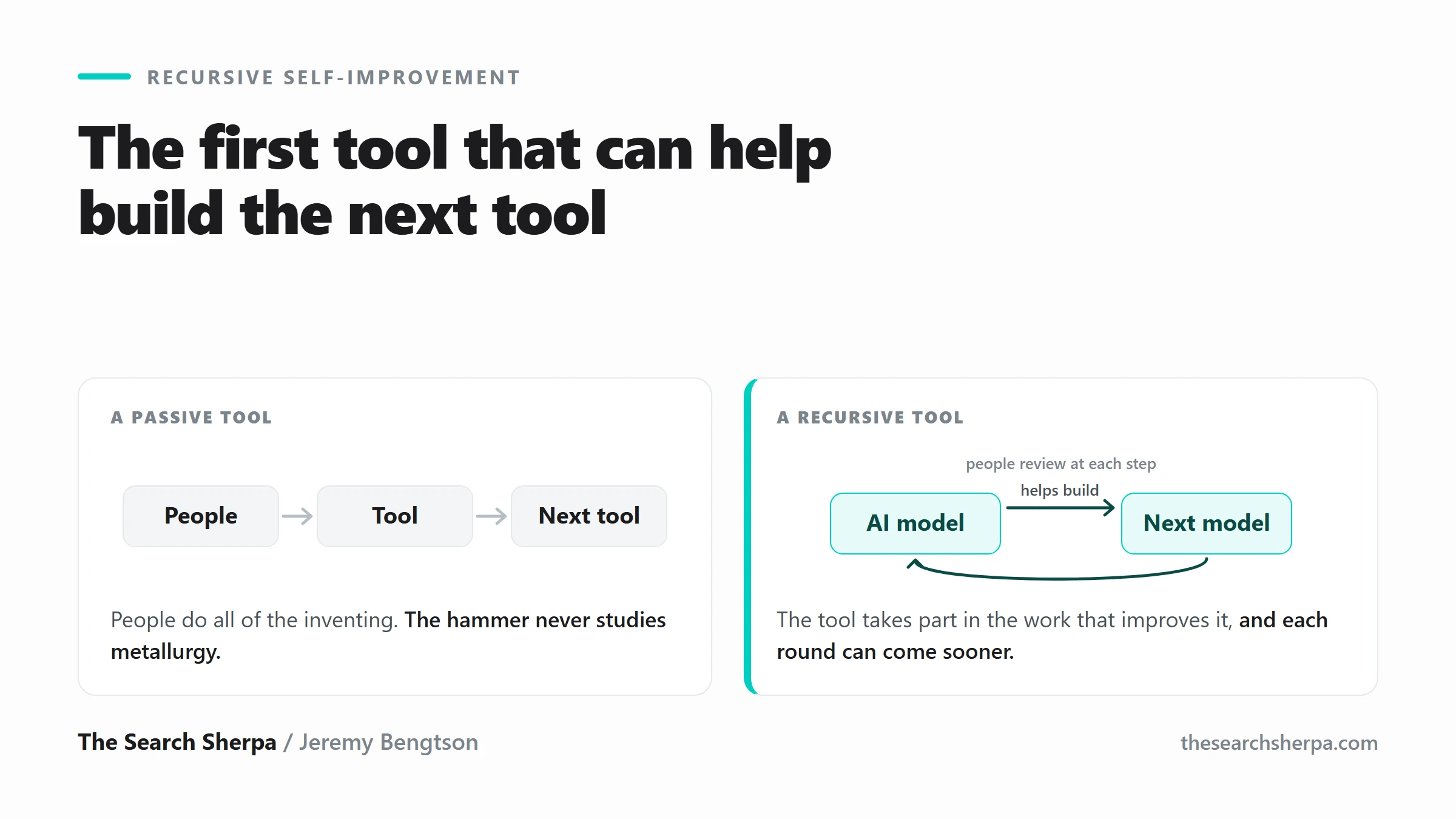
Recursive Self-Improvement: What Happens When AI Helps Build Better AI
Local SEO Title Tags and Meta Descriptions: How to Write Your Own (With a Free Claude Skill)

Local SEO Agencies Near Me: Southwest Chicago Suburbs
Join Over 400,000 Entrepreneurs Getting Our Weekly Newsletter
Recent Posts
October 3, 2026
Local SEO for a single-location home services company in Joliet: $1,000 to $2,500 a month. Competitive or multi-town work costs more.
October 2, 2026
Write honest local title tags and meta descriptions yourself, with Google’s own rules, fictional examples, and a free Claude skill. Or ask The
October 1, 2026
A local SEO agency near you in the southwest suburbs: $1,000 to $3,000 a month, based in Mokena.