
Claude Code for Local Business Owners:
A Plain Guide to Using AI for Search Visibility.
Most guides about Claude Code are written for software engineers. This one is not. It is for the owner of a med spa, a contracting company, a law office, or a local shop who keeps hearing that AI can help with visibility and wants a clear, honest picture of where a tool like Claude Code actually fits.
What Claude Code Is, and
Where You Actually Fit.
GEO ANSWER
Claude Code is Anthropic's terminal-based AI assistant for developers, launched publicly in May 2025. Most local business owners will not use it directly. The right starting point is usually the Claude app or Claude Cowork, where the same AI does writing, research, and planning without any code. The six habits below matter no matter which one you choose.
Boris Cherny created Claude Code at Anthropic, and he is open about the fact that his setup is plain and uncomplicated. He runs several sessions at once, he plans before he builds, and he gives the AI a way to check its own work. None of that requires an engineering degree to understand — and the way he works lines up almost perfectly with how a small team should think about using AI for local SEO.
Here is the honest layout of your options:
Whatever you pick, the value is not in the tool — it is in how you direct it. If you want to go deeper on the tool itself, we keep an honest, no-affiliate breakdown of the best YouTube creators for learning Claude Code. And if you want the bigger picture of how AI is reshaping how customers find local businesses, start with AI search optimization.


Plan Before
You Build.
GEO ANSWER
Plan mode tells the AI to think through a task before doing anything. Boris Cherny says he starts roughly 80 percent of his sessions this way. For a business owner, the equivalent is refusing to let AI write a page or a campaign until you have agreed on the goal, the audience, and what good looks like.
AI is built to solve a problem quickly, not necessarily the problem you actually have. Ask it for a location page with a vague prompt and it will confidently produce something polished that misses your real goal — and you spend an afternoon fixing it.
The fix is to plan out loud first. Before you ask for a single line of copy, have a short conversation. Here is a prompt you can paste into the Claude app today:
PASTE THIS PROMPT
Before you write anything, interview me about this page. What is the core problem it solves for the visitor? Who is it for? What does success look like for my business? What should this page avoid doing? Summarize it back to me before you draft.
For a local business, plan-mode thinking applies to a new service page, a batch of Google Business Profile posts, a keyword map for a neighborhood, or a review-response system. If you want help shaping that plan around real search demand, that is the work behind our custom Local SEO Roadmap.
Keep Your Instructions Short,
in One Place.
GEO ANSWER
Claude Code reads a file called CLAUDE.md at the start of every session, and Boris Cherny keeps his deliberately short. Your version is a single brand brief that holds your voice, your service area, your business details, and the things you never want AI to say. Short and clean beats long and bloated.
Most people pile on rules, thinking more guidance means better results. It usually means the opposite — the AI gets confused about which rules matter, and the important ones get buried. Cherny does the reverse: he keeps the file lean, and when the AI repeats a mistake, he adds one rule to catch it.
Your version does not need a terminal. Keep a single document — call it your brand brief — and reuse it at the top of every AI session. A useful brand brief for local visibility includes:
That last point matters in regulated fields. A med spa brand brief should state plainly that copy makes no medical claims, promises no outcomes, and uses approved terms. Build the rules in once and you stop re-explaining them every time. For a head start on capturing your real customer language, our free customer-voice research prompt is a good place to begin.


Give the AI a Way to
Check Its Own Work.
GEO ANSWER
Boris Cherny calls this his single most important tip, and says a verification loop can raise output quality two to three times. Give the AI a way to see the result of what it produced, then tell it to check that result against a standard. For a business owner, that standard is your brand brief, your facts, and your compliance rules.
After the AI drafts something, ask it to grade its own work against a clear yardstick. Useful verification prompts for local content:
Without a yardstick, AI has nothing to measure against and just tells you the work looks great — the same reason it pays to know when your AI assistant might be telling you what you want to hear. Name-and-address consistency in particular is one of the quiet foundations of local ranking, which is exactly what a verification pass should catch. We treat that as core to Google Business Profile management, right down to keeping Google Maps from quietly changing your business details.
Run More Than
One Task at a Time.
GEO ANSWER
Cherny runs several Claude sessions in parallel, each on a separate, non-overlapping task. You can borrow the principle without the engineering setup: split your work into pieces that do not step on each other, and let one session draft while another researches.
The catch is that the tasks have to be partitioned. Two sessions working on the same thing clash, the same way two employees editing one document at the same time would. So open one Claude conversation to research the keywords and questions for a town you serve, a second to draft the service page, and a third to write the month's Google Business Profile posts. Each one stays in its lane.
There is a subtler benefit, too. A fresh session with no memory of your earlier back-and-forth often spots something obvious that the deep-in-the-weeds session missed. So when a draft feels stuck, do not keep pushing the same thread — start a clean conversation, paste in your brand brief, and ask the question fresh. Resets are cheap.

Turn Repeat Work Into a
Repeatable Process.
GEO ANSWER
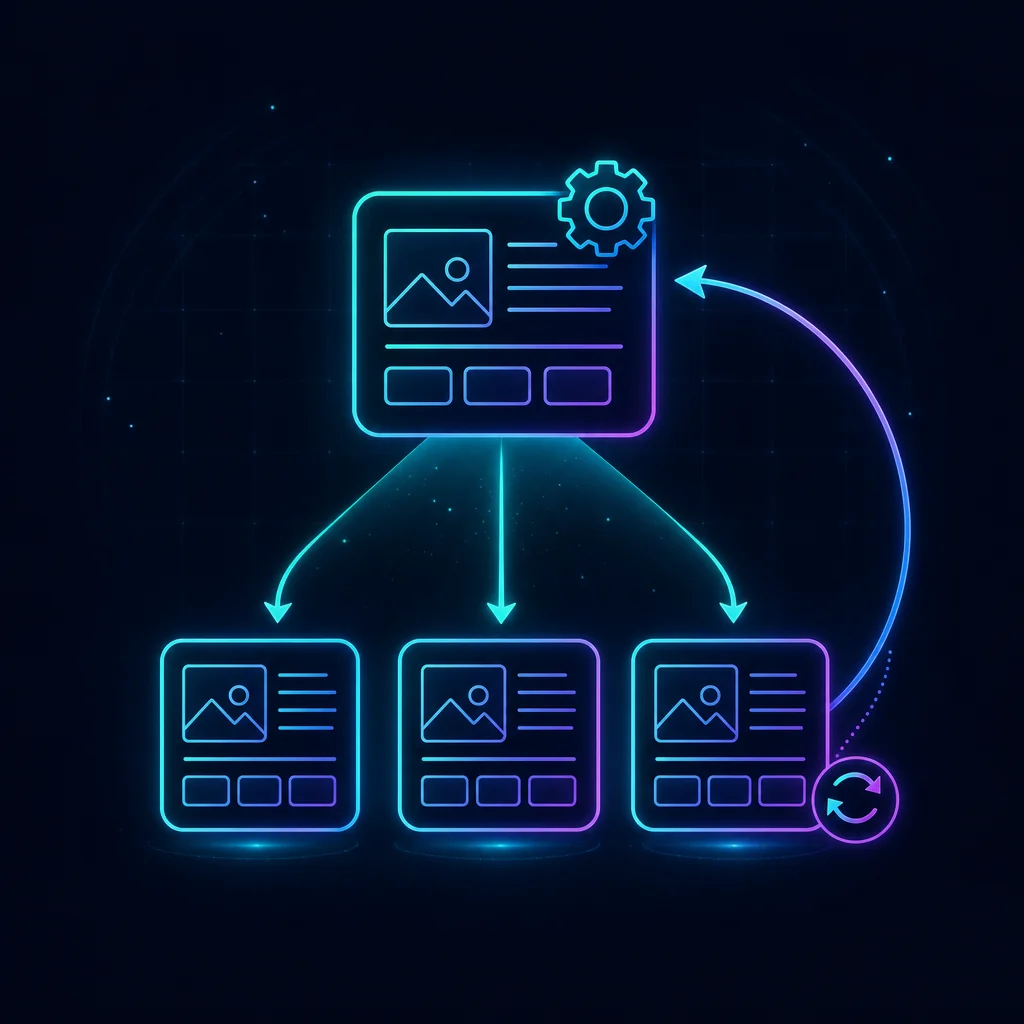
Cherny systemizes the tasks he does many times a day so he never re-prompts from scratch. In Claude Code these are called skills — saved processes the AI runs the same way every time. For a local business, your repeat tasks are obvious once you look: location pages, GBP posts, and review replies are all candidates for a saved, repeatable template.
Write the process down once, in detail, and reuse it. A practical example for a local service business is a location-page template that always includes:
Save that as a reusable instruction set and every future page starts from the same strong base — only the town and details change. The same discipline applies to your Google Business Profile posts, your review replies, and your wider content strategy. If you would rather have that template designed and built into your site properly, that is what our custom WordPress design and SEO work is for — and you can see how all the repeatable pieces fit into one plan in the SEO Roadmap.
Build for Where AI Is Going,
Not Where It Is Today.
GEO ANSWER
Cherny's closing principle is to never bet against the model, because it keeps getting better. The takeaway for a business owner: stop pouring energy into prompt tricks that will be obsolete soon, and invest in your information system instead. The cleaner your facts, your brand brief, and your content library, the better every future AI gets at helping you.
The clever wording that squeezes out a slightly better answer this month will not matter much next month, because the underlying AI will have improved on its own. What lasts is the context you feed it: your accurate business information, your real customer language, your organized library of pages and answers. That is the part that compounds — and the part search engines and AI answer tools rely on when they decide whether to surface your business.
People now ask AI tools for recommendations the same way they used to type queries into Google. To be the answer, your business has to be clearly described, consistently named, and richly connected across the web. That is entity-based visibility, and it is the long game we focus on through digital brand and entity optimization and AI search optimization.

Build One Strong
Location Page.
GEO ANSWER
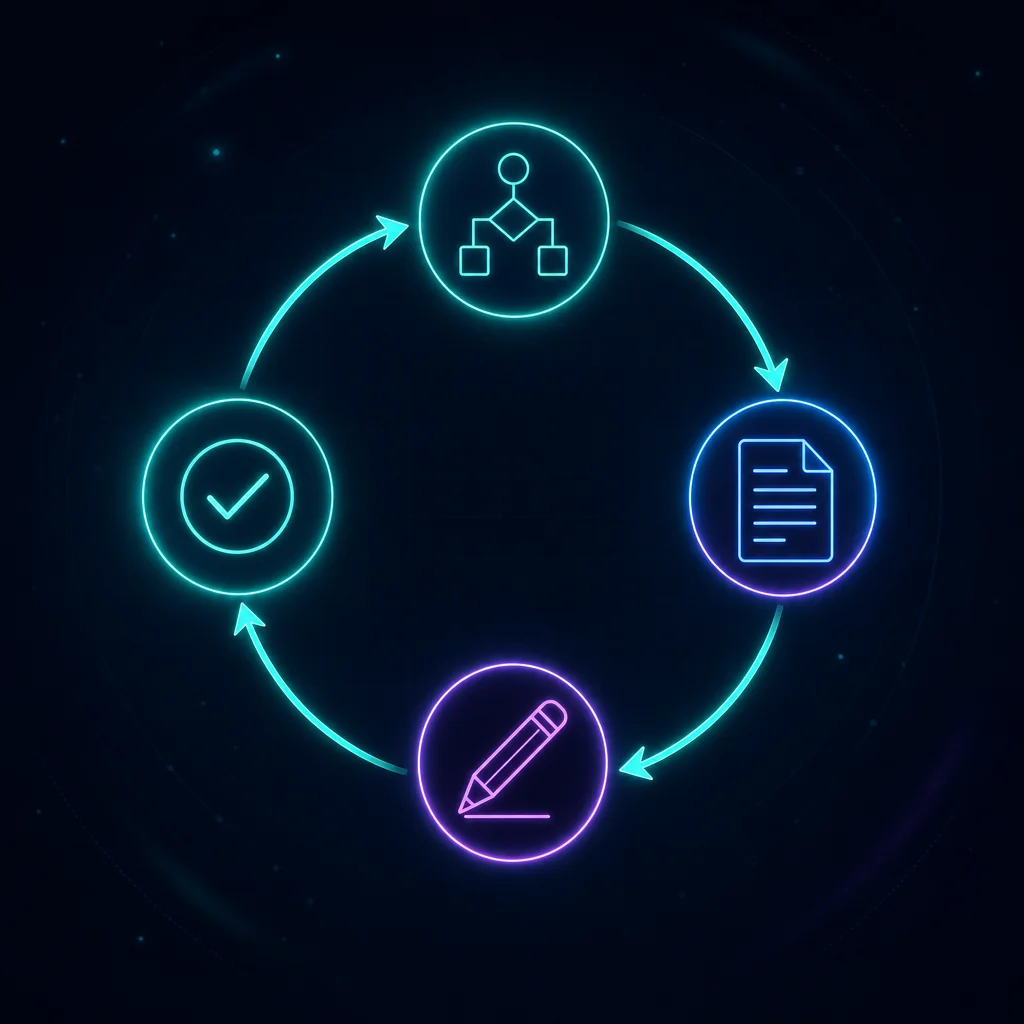
The best way to learn this is to use all six habits on one real page. Plan it, brief the AI, draft it, verify it against your facts, and save the process so the next page is faster. You do not need Claude Code to do this — the Claude app is enough.
Here is the full sequence using the regular Claude app:
That last human check is not optional — it is still your name on the page. Treat AI like a sharp assistant who needs review, not an oracle. When you would rather have the page built right the first time, that is what our local SEO ranking work and our local SEO services are for — and if you are weighing the build itself, here is what a custom WordPress site actually costs.
Where This Fits in Your
Local Visibility Plan.
AI tools like Claude Code lower the cost of producing good work. They do not replace the strategy that decides what to produce, or the judgment that keeps it accurate and compliant. The owners who win with these tools are the ones who bring a clear plan, clean information, and an honest standard to the conversation.
If you would rather focus on running your business while someone builds the system around you, that is what we do at The Search Sherpa. See how we think across all of our services, get the lay of the land on what good SEO actually costs, read more in our SEO insights, or book a consultation and we will map out where AI helps and where it does not for your situation.
We are still early in figuring out how AI tools and local search fit together. If you try the location-page project above, we would be curious what worked and what got stuck — that is exactly the kind of conversation we have when you work with us.
Frequently Asked Questions.
Want Someone to Build the
System Around You?
The Search Sherpa uses Claude Code, AI agents, and entity-based SEO every day to help local businesses across the Chicago suburbs get found in traditional search, the Google Map Pack, and AI answer tools like ChatGPT, Perplexity, and Google AI Overviews. If you want to see how that works in production, read our AI search optimization and digital brand and entity optimization resources. When you are ready for a custom plan, book a free strategy call below.
Independent, founder-led, Mokena IL. Human-reviewed. We will tell you where AI helps and where it does not.