
By Jeremy Bengtson, founder of The Search Sherpa.
I want to show you something small, then show you how absurd it is.
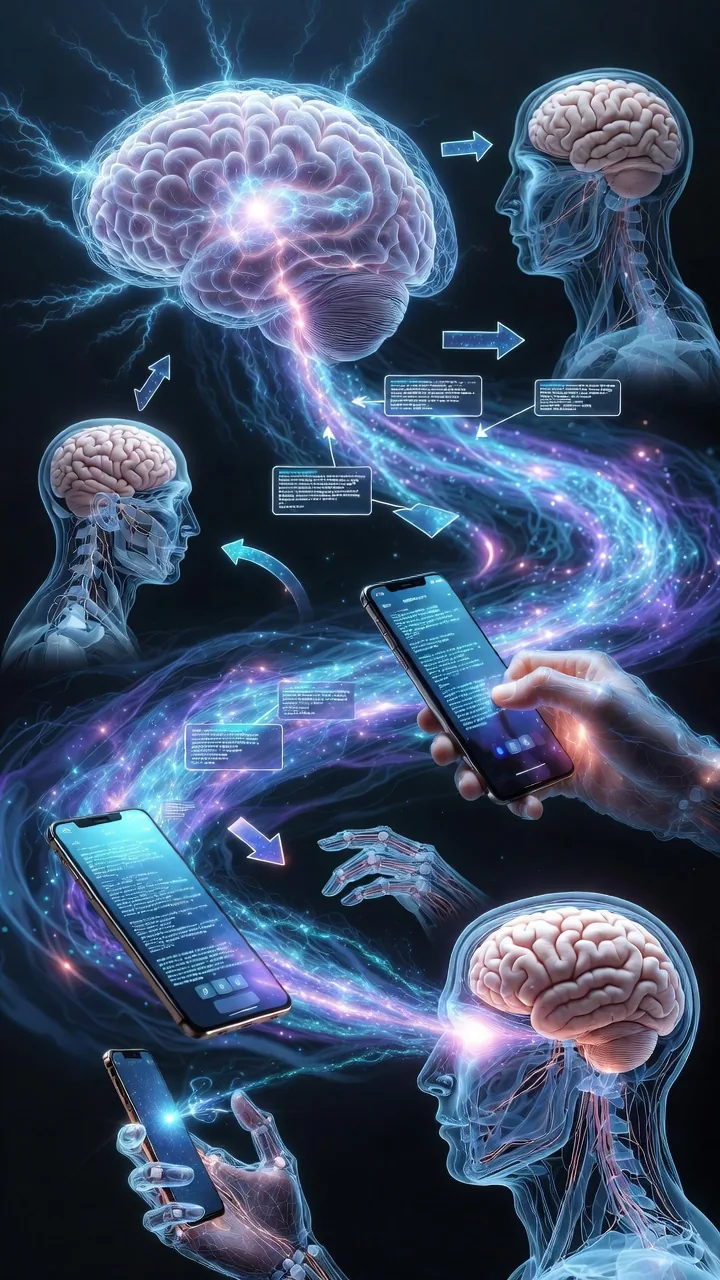
You think of someone. You want them to know it. So you pick up a slab of glass and metal, you find their name, you press tiny letters with the soft tips of your fingers, and you send three words across the planet: thinking of you. On the other end, light from a screen enters their eyes, travels down the optic nerve, and their brain rebuilds the thought you started with. It feels instant. It feels effortless. It is neither.
Every tool we have ever built for communication exists to carry a thought from one mind to another. And every one of them adds steps, adds friction, and quietly loses a little of the meaning along the way. What excites me is the day we stop carrying thoughts around and simply share them.
Eight steps to say three words
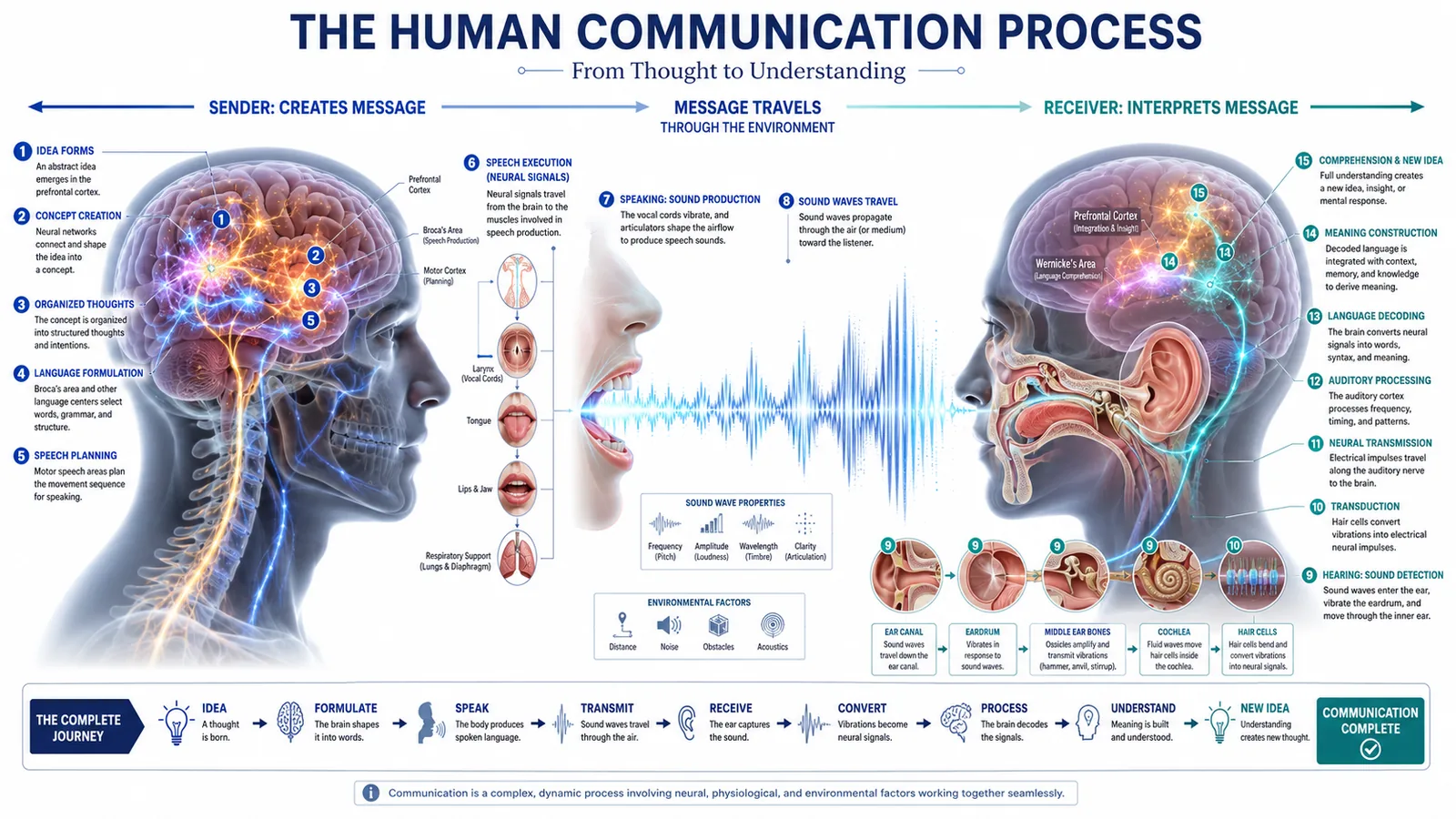
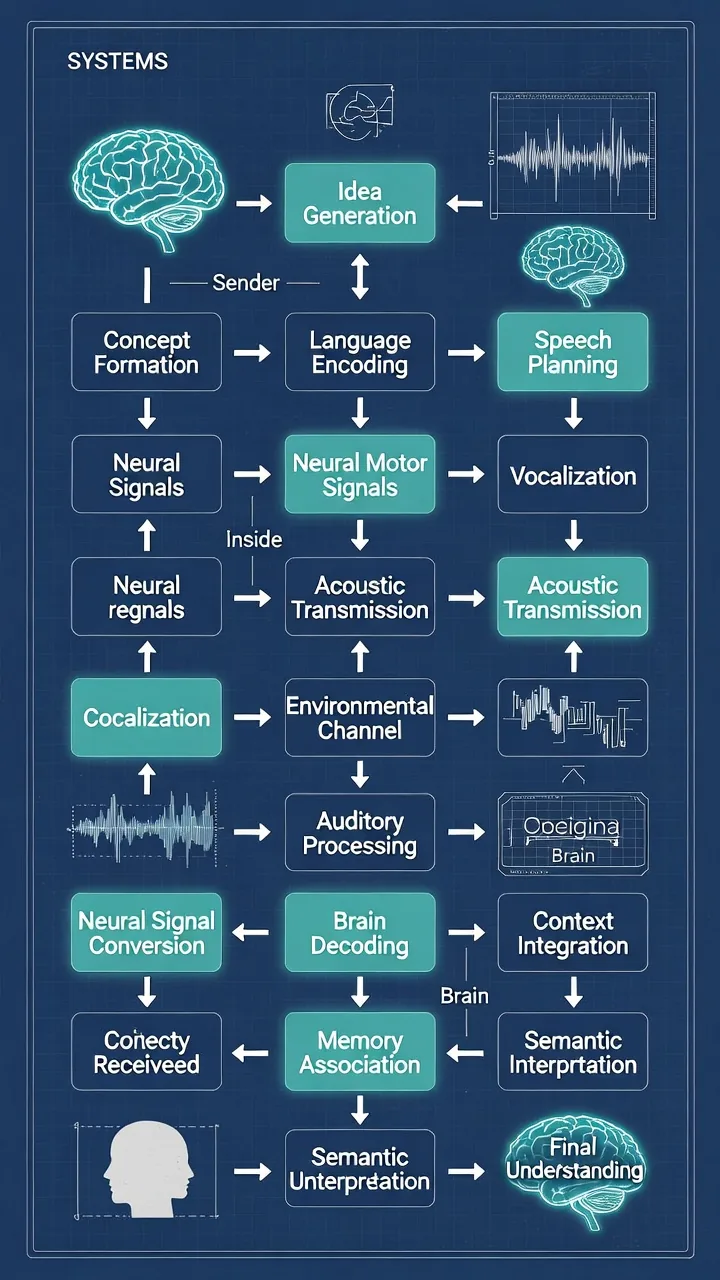
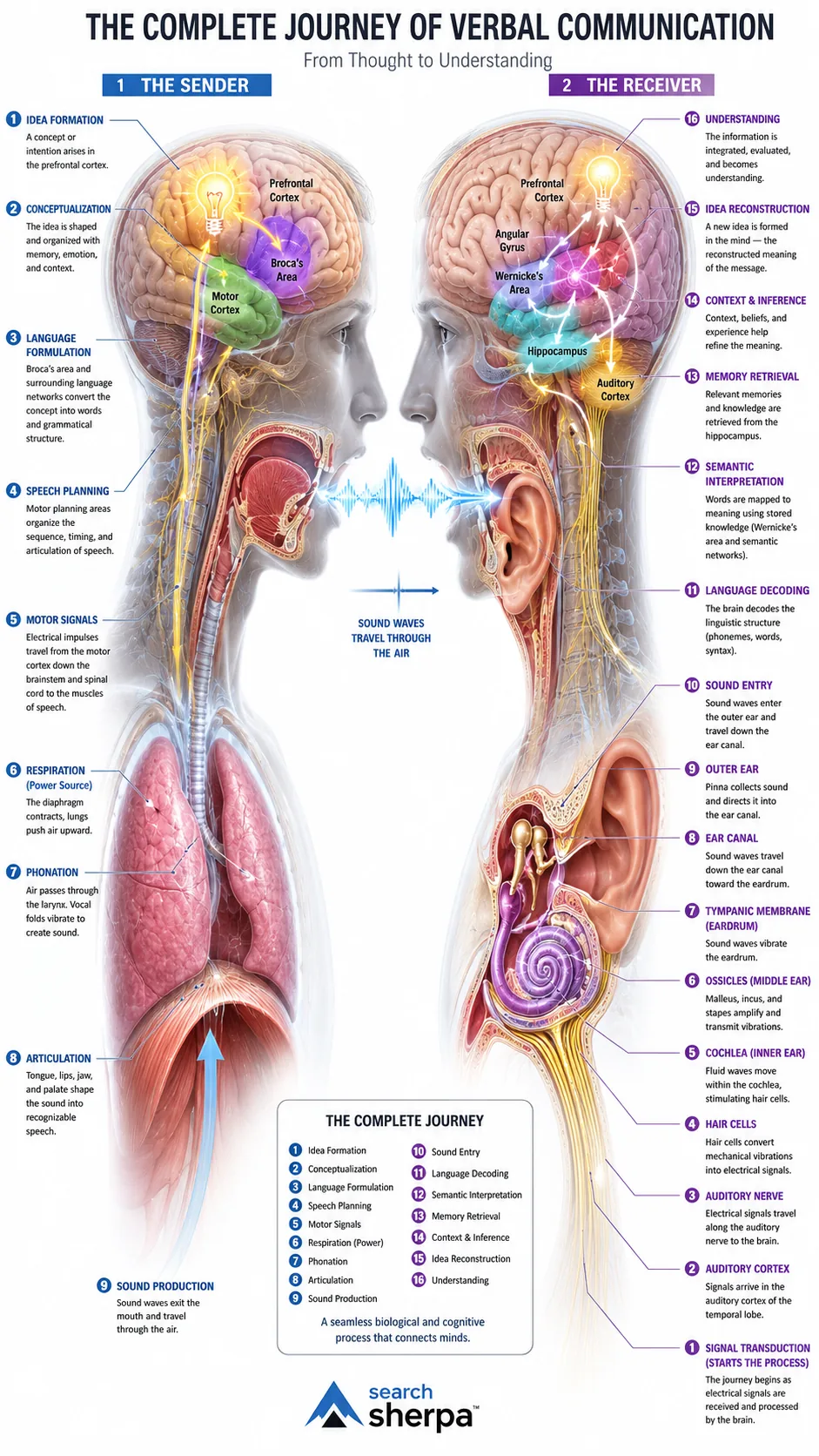
Researchers have mapped what actually happens when you send a simple text. It is not one action. It is a relay race with eight legs, and every handoff is a chance to drop the baton.
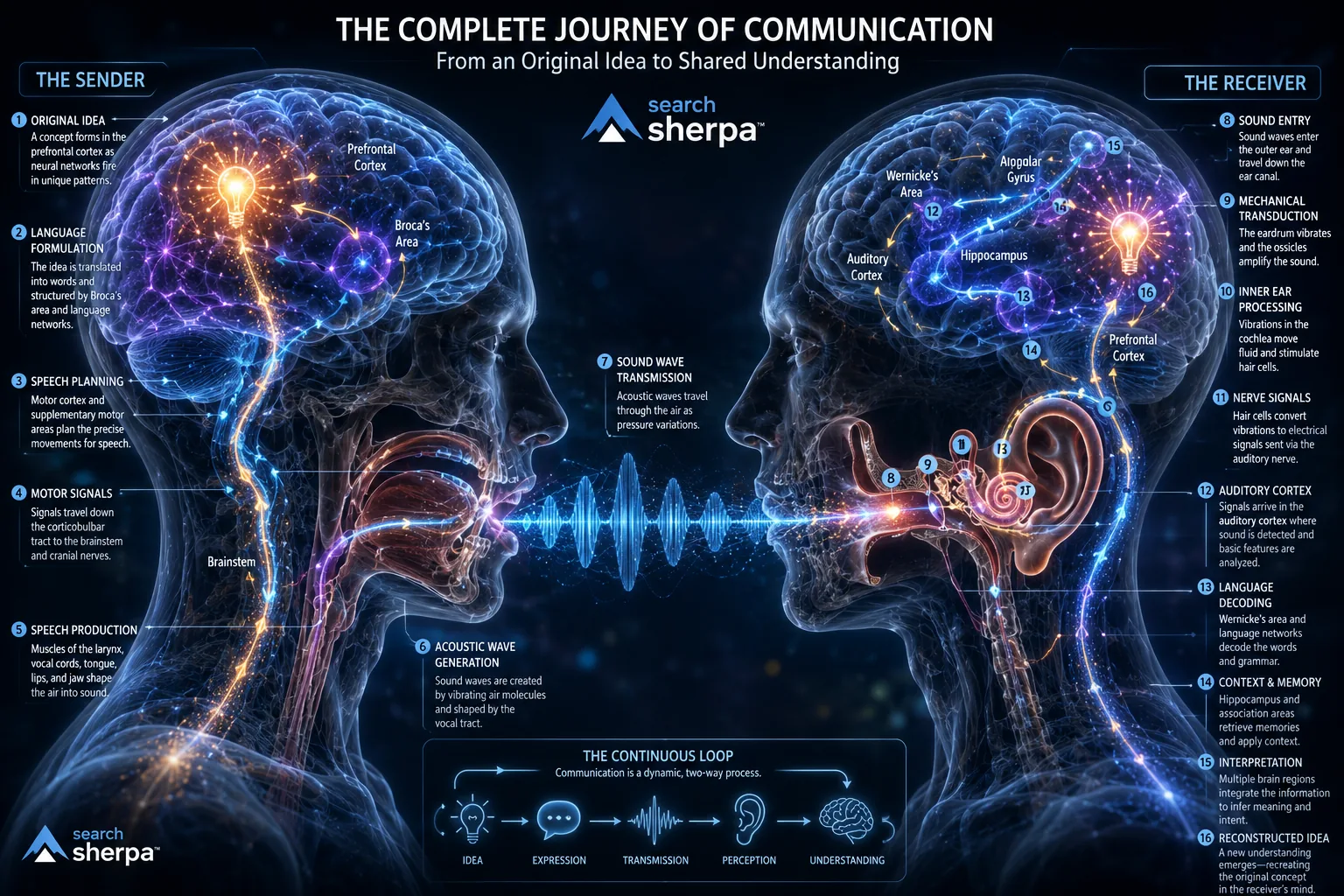
- An idea is born. A thought emerges in your prefrontal cortex. At this point it is pure. It has no words yet.
- Language is formed. Broca’s area organizes that raw thought into structured words. Already you are translating, and translation always costs something.
- Preparing to move. Your motor cortex fires up and activates the muscles in your hand.
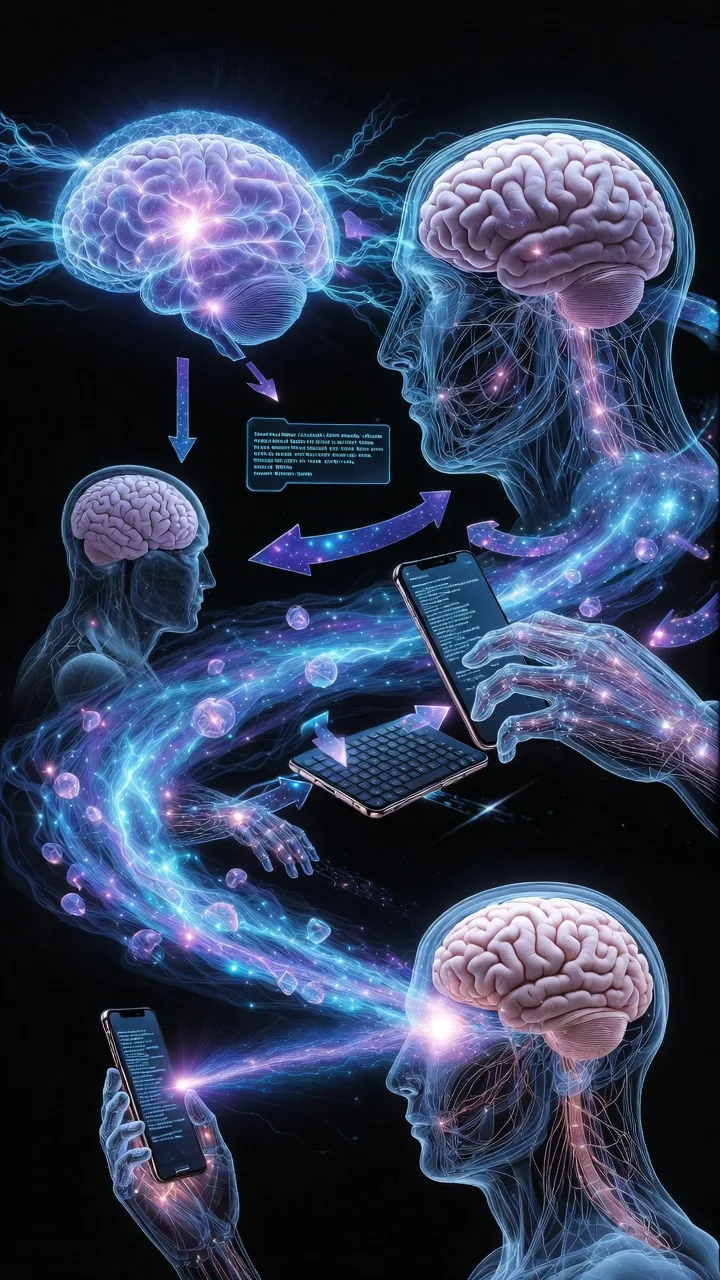
- The thought becomes text. Your fingers press keys, one at a time, turning a whole idea into a slow string of characters.
- The message is sent. Digital signals race across cell towers, servers, and networks toward another person.
- The message is received. The signal arrives on their device and is decoded back into text.
- The message is seen. Light from their screen enters their eyes.
- The message is understood. Their visual cortex processes the shapes, their brain reassembles the meaning, and only now, finally, do they have the thought you had eight steps ago.
Look at that list again. Only two of those steps are actually communication. The first one, where the idea is born, and the last one, where it is understood. Everything in the middle is packaging, shipping, and unpacking. Six steps of logistics wrapped around two steps of meaning.
Every step is a place where meaning leaks
Here is the part that keeps me up at night, in a good way. It is not just that those middle steps are slow. It is that they are lossy. Each one leaks a little of what you meant.
The moment your idea becomes words, you compress it. A feeling that had color, weight, and context gets flattened into a sentence. Then typing slows it down and strips the tone out, which is why “fine.” can start a fight. Then a screen shows the other person letters, not the thing you actually felt. By the time their brain rebuilds it, they are not receiving your thought. They are receiving a low-resolution copy of a copy, and then guessing at the rest.
We have spent thousands of years making the packaging better. Handwriting, the printing press, the telegraph, the telephone, email, the smartphone in your pocket. Each one shaved off steps or sped them up. But not one of them removed the fundamental problem, which is that a thought still has to leave your head, get encoded into some physical medium, travel, and get decoded on the other side. We keep upgrading the truck. Nobody has questioned whether we need the road.
What if we just deleted the steps
So let us do the thing engineers do with any inefficient process. Let us look at the eight steps and start deleting the ones that are pure overhead.
Delete the fingers. Why should a thought have to be re-typed by hand, one key at a time, when it already exists fully formed in your head? The muscles, the tapping, the autocorrect wars. All of that is a workaround for the fact that our brains have no output port. Remove it and step three and step four vanish.
Delete the device and the screen. The glass rectangle is a middleman. It exists only to turn signals into light so your eyes have something to read. If the message never needs to become light, you do not need the screen, and you do not need the eyes to do the reading. Steps four, seven, and part of eight collapse.
Delete the round trip through the physical world entirely. No hand, no keyboard, no screen, no optic nerve straining to decode shapes in the dark. What is left is the only part that ever mattered. A thought is born in one mind, and it arrives, whole, in another.
That is the future I get genuinely excited about. Not a faster phone. The end of the phone. An implant in the neocortex that reads the thought at the moment it forms, and sends it, mind to mind, over the air. Communication with the packaging removed.
This is not science fiction anymore
If this sounds like something from a movie, I understand. But the pieces are further along than most people realize, and they are moving fast.
Brains can already control machines by thought. Companies like Neuralink and long-running academic programs such as BrainGate have implanted electrodes in the human cortex that let paralyzed people move a cursor, click, and type using intention alone. No hands. The thought is the command.
Brains can already turn intention into text and speech. Research teams at Stanford and UC San Francisco have decoded attempted handwriting and attempted speech directly from brain activity, letting people who cannot move or talk produce words on a screen at conversational speeds. Step four, the fingers typing, is already being skipped in a lab.
Brains have already been linked to other brains. This is the one that gives me chills. As far back as 2013, researchers at the University of Washington connected two people so one could trigger a movement in the other’s hand over the internet. A later project called BrainNet linked three people so they could collaborate on a task by sending signals brain to brain. Crude, slow, and narrow, yes. But the road has been crossed. Mind to mind is no longer a hypothesis.
Put those three lines of research next to each other and the shape of the future is obvious. Read the thought, decode the thought, transmit the thought to another brain. We are building each piece separately right now. Someone is going to connect them.
What we gain when the medium disappears
People hear “brain implant” and picture something cold and mechanical. I picture the opposite. I think removing the machinery makes communication more human, not less.
Think about everything that gets lost between step one and step eight today. Tone. Context. The feeling behind the words. The thing you meant but could not find the sentence for. Text messages start arguments not because people are cruel, but because the medium is thin. It carries the words and throws away the music.
Now imagine sharing the whole thing. Not just the sentence “I am okay,” but the actual state behind it, so the other person cannot misread you. Imagine explaining an idea and having the listener receive it fully formed, without you having to hunt for the perfect words to smuggle it across. Imagine how much closer to another person you could feel when there is nothing standing between your mind and theirs. Less friction is not colder. It is warmer. It is more honest. The gap between what you feel and what the other person understands is where almost all human misunderstanding lives, and I want to close it.
The honest part: what has to be solved first
I run a business on telling people the truth, including the uncomfortable parts, so I am not going to pretend this future is simple or free. The same friction that annoys me in communication is also a form of protection, and removing it raises real questions.
Privacy becomes everything. The gap between thought and speech is where you edit yourself, reconsider, and choose what to share. A direct link has to protect that. Not every thought is a message, and any real system has to know the difference and put you in full control of the send button.
Consent has to be absolute. The most exciting thing about mind-to-mind communication is also the most dangerous. A channel into your head is the most personal thing that could ever exist, and it cannot be something done to you. It has to be something you choose, moment by moment.
We are early. Today’s brain interfaces are narrow, slow, and require surgery. The leap from moving a cursor to sharing a nuanced thought is enormous. I am excited about the direction, not claiming the destination is close. Anyone who tells you the timeline with confidence is selling something, and you already know how I feel about that.
What a company obsessed with friction sees here
You might be wondering why an SEO and AI-search agency is writing about neural implants. Here is the honest answer. This is not a detour from what we do. It is the purest version of it.
My whole job is removing steps between one mind and another. When someone needs a therapist, a dentist, or a chiropractor, there is a chain of friction between their need and the business that can help them. They have to think of the right question, type it into Google or ask ChatGPT, wade through results, decode which option is trustworthy, and finally understand who to call. That is the same eight-step relay, just pointed at a purchase instead of a text. Every extra step is a place where the connection breaks and the customer gives up.
The work we call AI search optimization and digital brand entity optimization is, at its core, friction removal. We make a business so clear and well-structured that when a person, or the AI answering that person, reaches for the right answer, your business arrives fully formed. No wading. No guessing. The need on one side and the right business on the other, with as little in between as possible. It is brain-to-brain communication for commerce, built with the tools we have today.
So no, we cannot put an implant in your customer’s head. But we can delete a shocking number of the steps between their intent and your answer, and that is a version of the same dream I get to chase every single day. If you are curious how AI is reshaping that path already, our guide to AI search tools for local businesses is a grounded place to start.
The direction we are heading
Communication has always been a story of deleting steps. We went from carving letters in stone, to writing on paper, to typing on keys, to speaking to a device that types for us. Each generation removed friction the last one accepted as permanent. The idea that a thought must be pressed out through your fingertips, one letter at a time, will look as quaint to my grandchildren as shouting across a valley looks to us.
One day, the eight steps become two. An idea is born, and it is understood. Everything in between, the muscles, the metal, the glass, the light, becomes a story we tell about how communication used to work. I cannot wait. And until that day arrives, I will keep doing the closest thing I can, which is deleting every needless step between the people who need help and the businesses ready to give it.
Frequently asked questions
What is brain-to-brain communication?
Brain-to-brain communication is the idea of sending a thought directly from one person’s brain to another’s, without typing, speaking, screens, or any physical device in between. Early lab experiments have already linked human brains to share simple signals, though sharing rich, nuanced thoughts is still a long way off.
Does the technology for this actually exist yet?
Pieces of it do. Brain-computer interfaces already let people control cursors and type by thought, and researchers have decoded attempted speech and handwriting directly from brain activity. Human brains have even been linked to share basic signals. But a practical, high-resolution mind-to-mind link is still years of research away.
Would a brain implant make communication less human?
I would argue the opposite. Today’s tools carry the words and lose the tone, context, and feeling behind them, which is why texts get misread. Removing the lossy middle steps could let people share meaning more fully and understand each other more deeply, as long as privacy and consent are protected.
What are the biggest risks of brain-to-brain communication?
The two largest are privacy and consent. The gap between thinking and speaking is where you edit yourself, so any system has to guarantee that only what you choose to send is sent. And a channel into someone’s mind can never be something done to them. It has to be fully opt-in, moment by moment.
What does this have to do with SEO or AI search?
Both are about removing friction between one mind and another. Good SEO and AI search optimization delete the needless steps between a customer’s need and the business that can meet it, so the right answer arrives clearly and quickly. It is the same goal as brain-to-brain communication, applied to how people find and choose businesses today.
I love thinking about where communication is heading, but I make my living removing friction in the version of it we have right now. If you want fewer steps between the people searching for what you do and the moment they understand you are the answer, that is exactly the work we do. You can work with Jeremy or request a free website and SEO review any time.
Explore This Topic

SEO for Moving Companies (2026): How Movers Get Found in Local Search
How to Remove a Google Review (2026): What Google Will and Won’t Take Down

Local SEO for Home Services Companies Joliet IL

Watch: AI Is the First Tool That Can Help Build the Next Tool
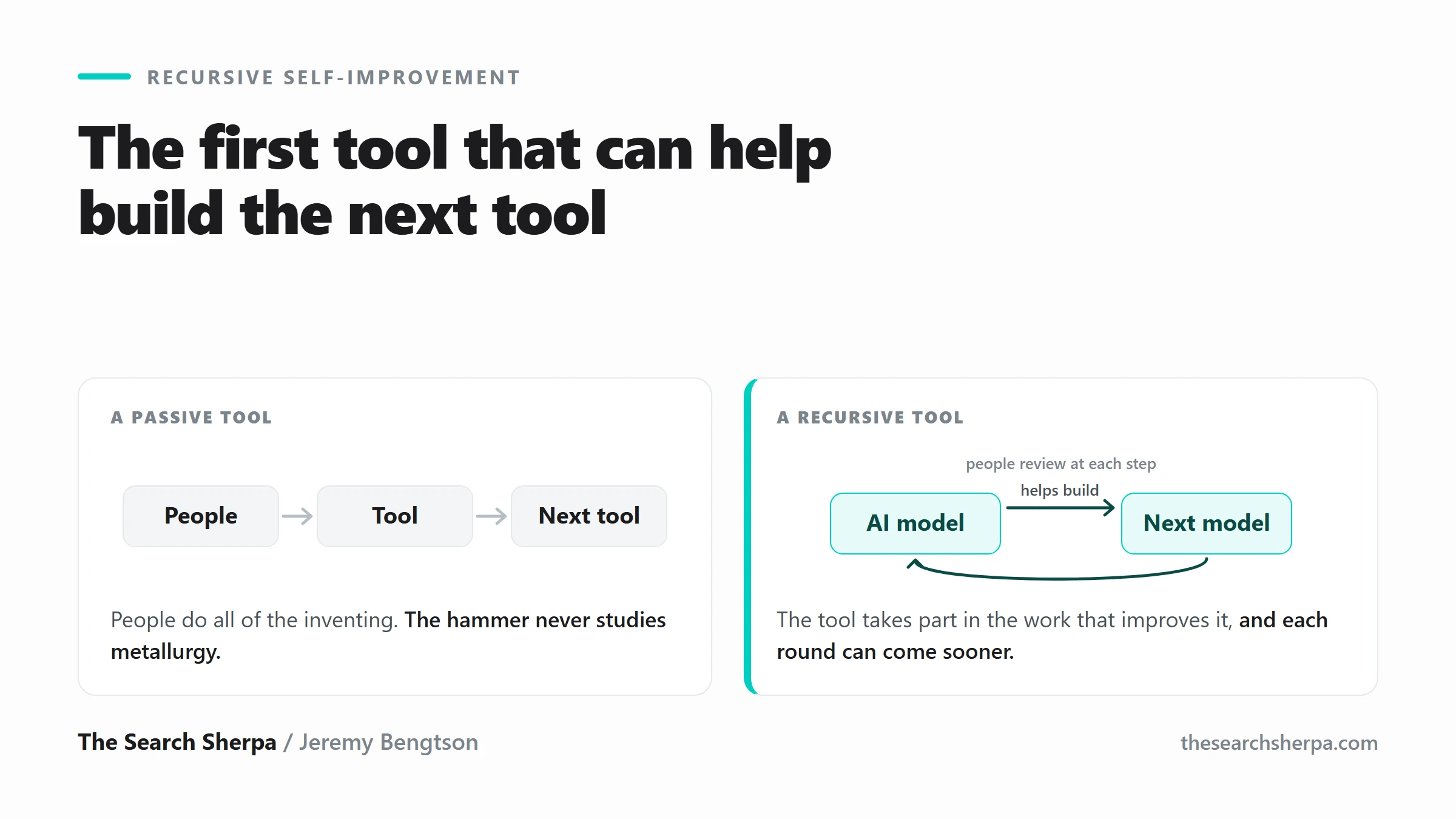
Recursive Self-Improvement: What Happens When AI Helps Build Better AI
Join Over 400,000 Entrepreneurs Getting Our Weekly Newsletter
Recent Posts
October 3, 2026
A 66-second short from Jeremy Bengtson on why AI is the first tool that can help build the next tool, and why forecasts
October 3, 2026
Recursive self-improvement is when AI helps build the next AI, so each round can come sooner. Here is where the idea came from,
August 22, 2026
High achievers often feel most behind right after a win. This is the achievement anxiety paradox: why success stops satisfying, and how to