

Type chiropractor near me into ChatGPT or a Google AI Overview today, and something different is happening behind the screen than it was two years ago. The system is not just matching keywords against a page anymore. It is drawing on memory, personal history, and everything it has learned about the person asking, then weighing that against everything it can find about your business. That shift is the subject of answer engine optimization (AEO): making your business easy for AI systems, not just traditional search engines, to understand, trust, and recommend.
Jeremy Bengtson, founder of The Search Sherpa in Mokena, Illinois, has spent the last several years watching this pattern play out across local clients in different specialties. The businesses that show up in AI-generated answers are rarely the ones with the most keywords on a page. They are the ones whose real-world reputation and on-site detail give an AI system enough to work with. This guide breaks down how that shift works, why customer experience has quietly become a ranking input, and what a local business owner can actually do about it.
One thing upfront: we do not promise rankings, lead counts, or AI-answer appearances, because no honest provider can. AI systems are built and controlled by other companies, they change constantly, and no one outside Google, OpenAI, or Anthropic decides exactly which businesses get named in a given answer. What follows is grounded, practical guidance … not a guarantee.
What Answer Engine Optimization Actually Means Right Now
For two decades, ranking well meant showing up as a blue link on a results page. Answer engines work differently. Tools like ChatGPT, Perplexity, Google Gemini, and Google AI Overviews do not hand a searcher ten links to sort through. They synthesize a single answer, often naming one or two specific businesses. That is a different game. It rewards businesses whose identity, services, location, and reputation are clear and consistent everywhere an AI system might look: your website, your Google Business Profile, review platforms, directories, and anywhere else your name appears online. This article covers how that plays out for a local business. For the underlying definition, and how it differs from SEO and GEO, start with what answer engine optimization is.
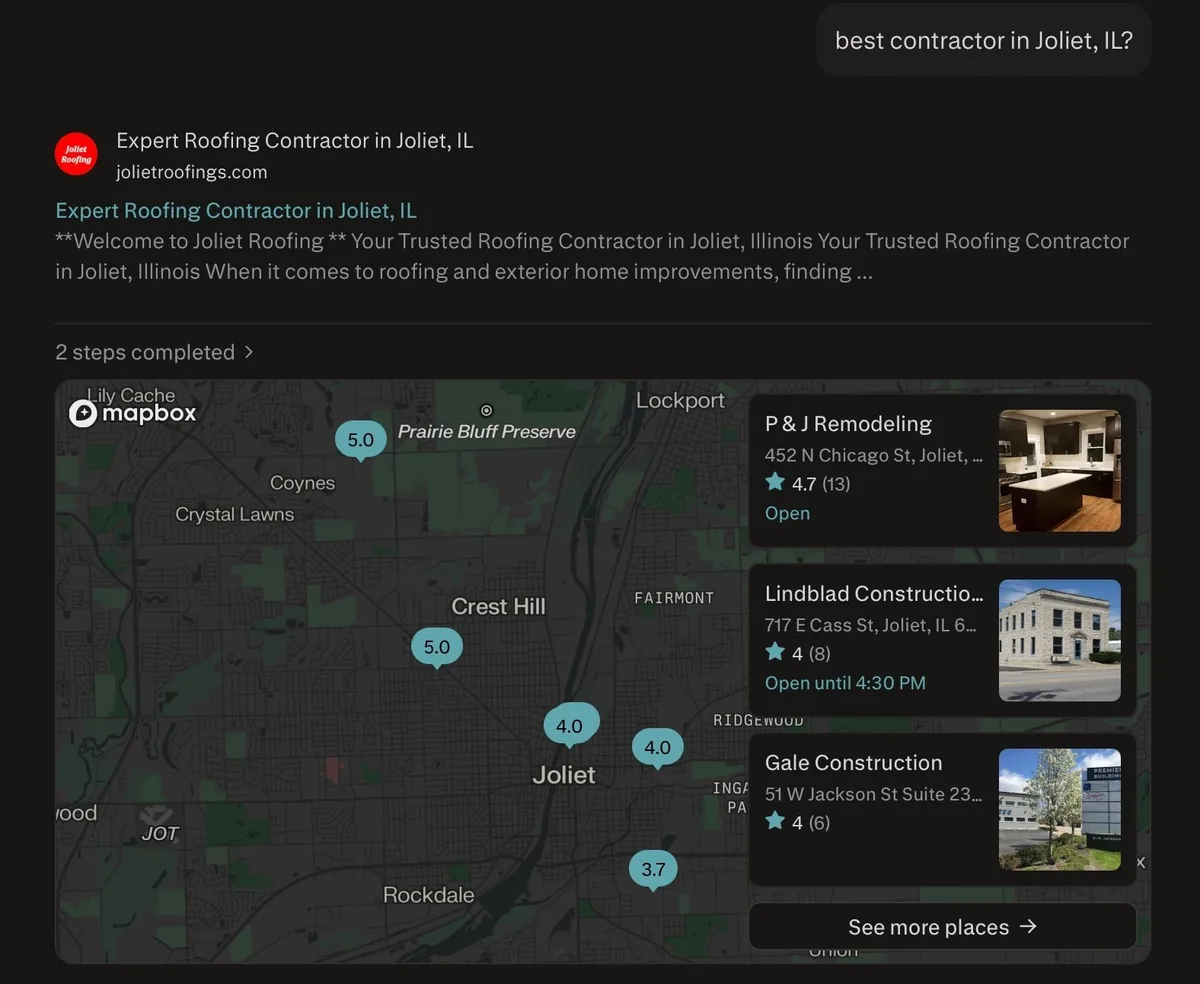
You will also see the closely related term generative engine optimization (GEO) used almost interchangeably with AEO. The distinction is mostly academic for a local business owner. Both describe the same underlying goal, which is optimizing for AI-generated answers rather than only for traditional organic rankings. Neither replaces conventional SEO. They sit on top of it, because the same signals that help Google rank a page (clear content, structured data, real reviews, consistent business information) are also what an AI system leans on when it decides who to mention.
For a local business specifically, this matters more than it might first appear. National and enterprise brands can lean on sheer size and volume of mentions across the web. A single-location chiropractor, dentist, salon, or home services company does not have that scale. That means the handful of places where the business does describe itself, its website, its Google Business Profile, and its reviews, carry outsized weight. Getting those few sources right is a more realistic strategy for a local business than trying to out-publish a national competitor.
How LLM Memory, History, and Personalization Are Changing Local Discovery
Traditional search behaved like a lookup. A person typed a query, an algorithm matched it against an index of pages, and returned the closest results in ranked order. Every searcher typing the same words got roughly the same list. Large language models work on a different principle. Rather than a fixed set of rules, an LLM is probabilistic. It takes in the available context and produces the most statistically likely useful response. Increasingly, that context includes memory: a working sense of who is asking, built from prior conversations, stated preferences, and patterns in how a person interacts with the assistant over time.
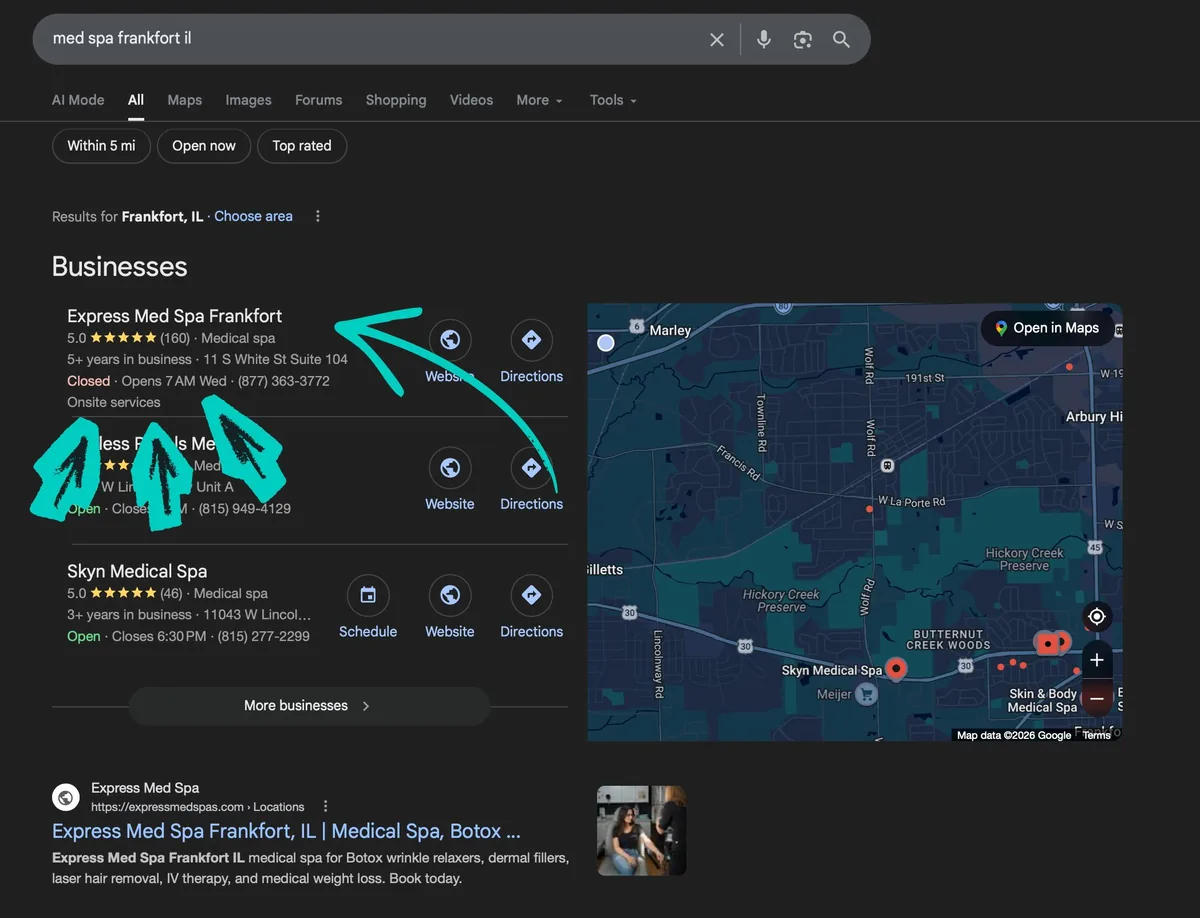
That has a direct consequence for local SEO and how nearby customers find your business. Two people can type the identical query, chiropractor near me, into the same AI assistant and get two different answers, because the system is filtering for fit as well as proximity. It is not only asking which chiropractor is closest. It is asking a second, less visible question: given what it already knows about this person, which of the nearby chiropractors is the better match. That second question is new. Most business owners have never been asked to think about it, because it did not exist as a ranking factor until AI assistants started carrying memory between sessions.
This is a real departure from keyword-only thinking. A business can be doing everything right on a traditional SEO checklist and still lose an AI-generated recommendation to a competitor whose online presence simply communicates a better match for that searcher’s stated or inferred preferences.
Customer Experience Is Becoming a Ranking Input, Not Just a Nice-to-Have
Here is the part that is easy to miss. An AI system does not experience your business directly. It only knows what has been written about it: reviews, Q&A answers, your own website copy, and directory listings. A comfortable waiting room, a particular bedside manner, flexible scheduling, a specific atmosphere … none of it counts until somebody writes it down. If your real customer experience never gets described anywhere in text, an AI system has no way to know it exists, no matter how valuable it is in person.
That makes reputation and review management a genuine visibility lever, not just a trust exercise. Reviews that describe specific, concrete experiences, not just star ratings, give an AI system real language to work with when it is trying to match a searcher’s preferences to a business. A five-star average built on generic praise carries far less descriptive signal than reviews that mention what the visit was actually like.
A Concrete Illustration: The Comfortable Office Example
Consider a simple, common scenario. Someone has mentioned in past conversations with an AI assistant that they dislike cold environments and prefer warm ones, maybe in the context of where they like to shop or vacation, nothing to do with healthcare. Later, that same person asks for a chiropractor nearby. An assistant with memory does not just pull up the closest chiropractor on a map. It can weigh that background preference against what it knows about each nearby practice. If one chiropractor’s reviews or website mention a warm, comfortable office, that detail becomes a real point in that business’s favor for that specific person.

Nothing about that outcome is guaranteed, and it will not apply to every searcher or every query. But it illustrates the underlying mechanic well. Personalization is becoming part of how local recommendations get made, and it is a layer almost entirely missed by businesses that are only optimizing for keywords. The practices that win these moments are not doing anything exotic. They have simply described their real experience, in writing, somewhere an AI system can find it.
How AI Actually Decides Who to Recommend
No outside provider, including us, has access to the internal ranking logic of ChatGPT, Gemini, Perplexity, or Google AI Overviews. Any claim to a secret method for controlling those systems deserves real skepticism. What is observable is the type of information these systems consistently draw on when they generate a local recommendation:
- Entity clarity. Whether your business name, category, services, and location are described the same way, consistently, across your website, your Google Business Profile, and other listings.
- Reputation signal. The volume, recency, and descriptive detail of your reviews, not just the average star rating.
- First-party depth. How much real, specific information your own website provides about what it is actually like to work with you, versus generic service-page boilerplate.
- Structured data. Schema markup and consistent formatting that make it easier for a crawler or an AI system to parse exactly what your business does and where.
- Corroboration. Whether independent sources (reviews, directories, local press, your own content) tell a consistent story about your business.
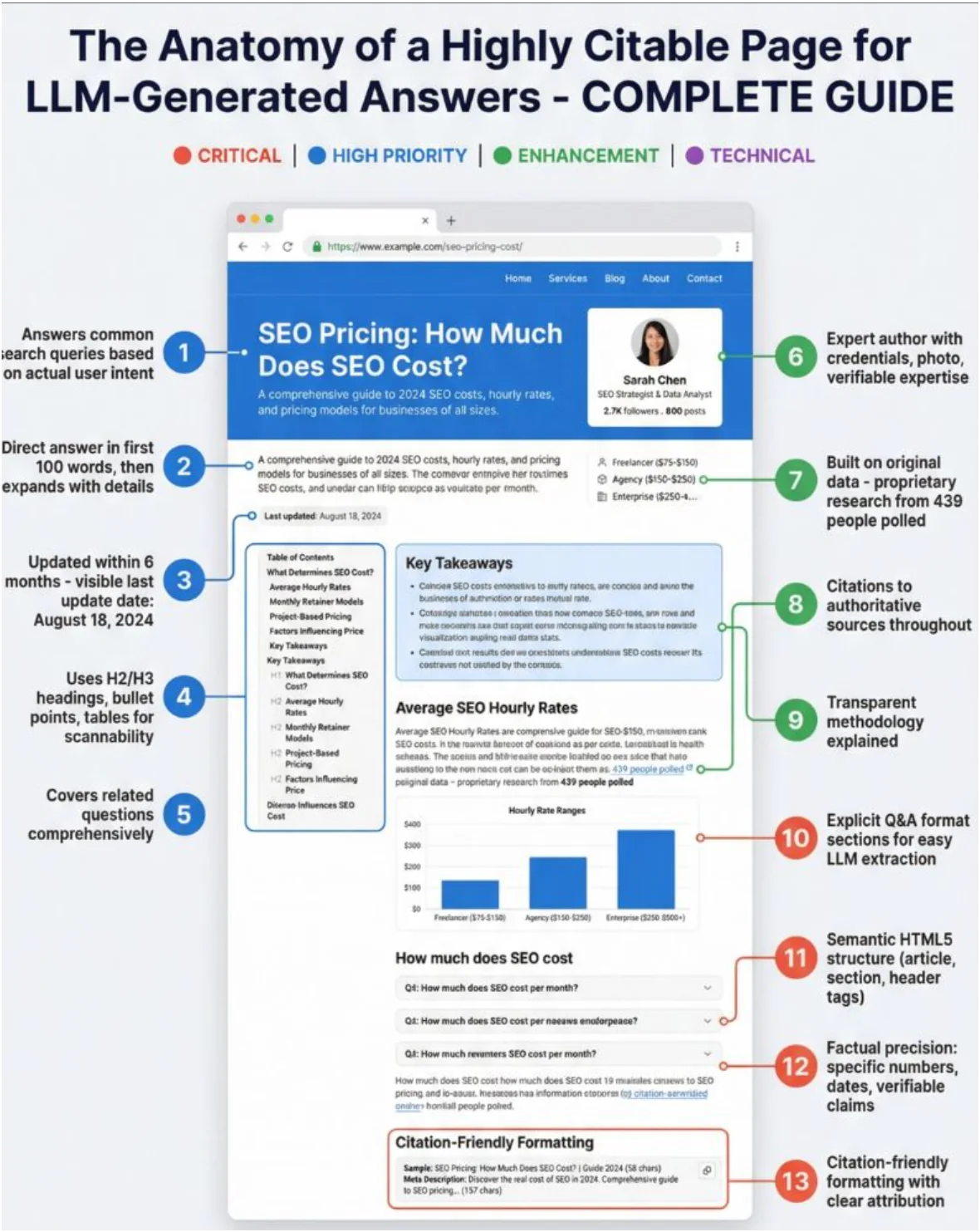
None of this is a loophole or a hack, and none of it produces a guaranteed appearance in any specific AI answer. It is closer to good digital hygiene applied to a new set of readers: the crawlers and language models now sitting between a searcher and your business.
It is worth being clear about what this is not. It is not a checklist you complete once and forget, and it is not a set of tricks that work around how these systems function. AI assistants are trained to reward genuinely useful, well-corroborated information and to be skeptical of anything that looks manufactured or inconsistent. A business that pads its Google Business Profile with generic keywords, or buys a batch of vague five-star reviews, is not adding the kind of descriptive signal these systems actually use. It is adding noise. The businesses that show up well in AI-generated answers tend to be the ones that simply describe what they actually do, clearly and consistently, in more places.
What Local Business Owners Should Actually Do About It
None of those five inputs does much on its own. They compound, which is why we treat them as one connected visibility system instead of a list of separate tasks. Four places to start, in the order that usually matters most for a local business.
For a worked example in one industry, our guide to testing what AI engines say about a med spa applies these five inputs to an aesthetic clinic and shows you how to check the result yourself.

Build a Real Reputation, Not Just a Review Count
Ask for reviews that describe a specific experience, not just a rating. A steady stream of detailed, recent reviews across the platforms your customers actually use gives AI systems, and human searchers, real language to work with. Ongoing reputation and review management is less about chasing a number and more about making sure your real customer experience is described somewhere in writing.
Fill Out Your Google Business Profile Completely
Your Google Business Profile is one of the most heavily referenced sources AI systems pull from for local businesses. Categories, attributes, services, hours, photos, and Q&A answers are all text an AI system can read and reuse. An incomplete or stale profile gives an AI system less to work with than a competitor’s fully built-out one.
Make Your Website Say More, Not Less
Most business websites use a small fraction of what they could communicate: a page or two of generic service descriptions and little else. Your website is the one online asset you fully own and control, which makes it the best place to add the kind of specific, descriptive detail that both searchers and AI systems are looking for. What a visit is actually like. Who you serve best. What makes your approach different. This is the core idea behind AI search optimization as a service: building out that depth deliberately instead of leaving it to chance.
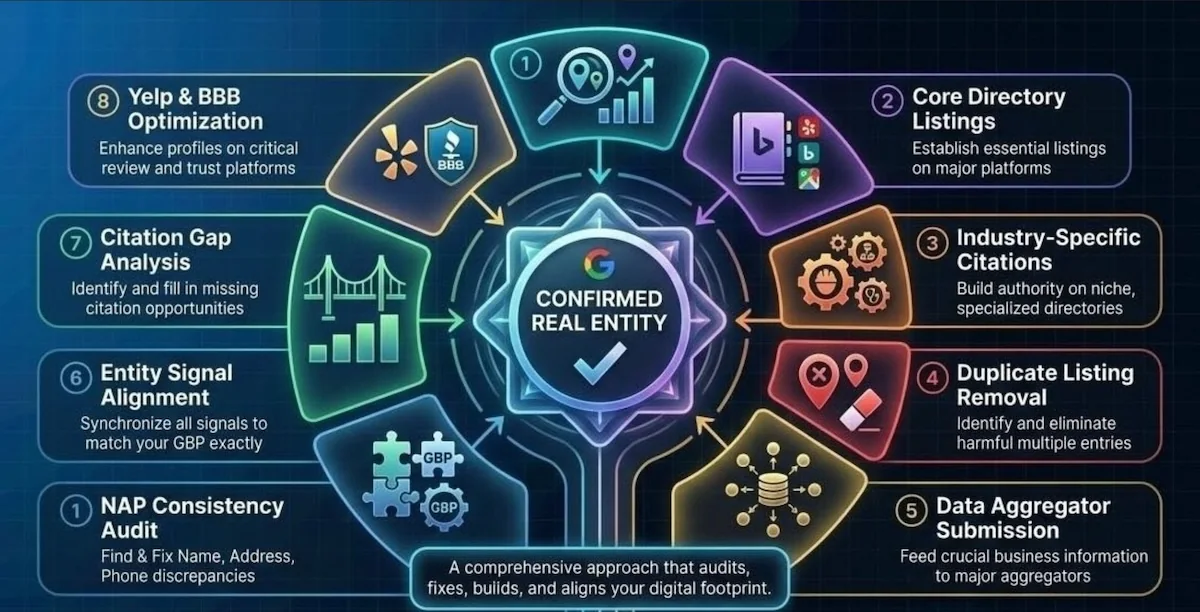
Get Your Entity Clarity Right
An AI system has to figure out, with confidence, which business it is even talking about before it can recommend you for the right reasons. Inconsistent business names, mismatched addresses across listings, and thin About pages all make that harder. Digital brand and entity optimization is the practice of making sure your business is described the same way, everywhere, so there is no ambiguity for a crawler or a language model to resolve.
Publish First-Party Content About Real Experience
Blog posts, FAQ pages, and short videos that describe real aspects of your business, in your own words rather than stock copy, give AI systems original source material instead of a rehash of a template. If you want this idea explained in under two minutes, watch a short video where AI SEO creator Joshua Albanese explains how memory and personalization are changing local search. It is the same concept this article expands on in more depth.
Related reading: for a broader rundown of the specific AI platforms and tools reshaping how local businesses get discovered, see our companion guide on AI search tools for local businesses.
Frequently Asked Questions
Does AI actually use personal memory to recommend local businesses?
Yes, increasingly. Modern AI assistants can carry context and stated preferences across a conversation or session, and use that context alongside a business’s public information (reviews, website content, Google Business Profile) when generating a recommendation. This is a real shift from earlier keyword-matching search. How much any one system uses memory at any given moment varies, and it is not something an outside business can control or guarantee.
What is answer engine optimization (AEO)?
Answer engine optimization is the practice of structuring and describing your business, across your website, your Google Business Profile, and other listings, so that AI systems like ChatGPT, Perplexity, Gemini, and Google AI Overviews can understand it clearly enough to reference or recommend it in a generated answer.
Is AEO different from generative engine optimization (GEO)?
Not meaningfully, for a local business. Both terms describe optimizing for AI-generated answers rather than traditional link-based results. They overlap with, and build on top of, conventional SEO rather than replacing it.
How long does it take to see movement in AI-driven visibility?
There is no fixed timeline for AI-answer appearances specifically, since the systems change frequently and are outside any provider’s control. As a general reference point, most local SEO shows measurable movement in about three to six months, depending on competition and the condition of your site. The foundational work that supports AEO, meaning reputation, entity clarity, and website depth, is the same work that supports traditional local SEO.
How much does answer engine optimization or local SEO cost?
Cost depends on your site, your competition, and your goals. We will be clear about pricing before any work begins, once we understand your current online presence and what needs to be built out. For a full breakdown of AI search pricing and how to measure results, see our AI search optimization cost guide.
Can you guarantee we will be recommended by ChatGPT or show up in AI Overviews?
No, and any provider who says otherwise is not being straight with you. ChatGPT, Gemini, Perplexity, and Google AI Overviews are built, trained, and controlled by other companies, and their outputs change constantly. We do not promise rankings, lead counts, or AI-answer appearances, because no honest provider can. What we can do is make sure your business’s real reputation and real detail are actually visible to these systems in the first place.
Do you only work with businesses near Mokena, Illinois?
No. The Search Sherpa is based in Mokena, Illinois, and most of our work is with owners across Will County and the southwest Chicago suburbs, including Frankfort, New Lenox, Tinley Park, Orland Park, Homer Glen, Lockport, and Joliet. We know this market because we work in it. Answer engine optimization is not geographically limited, though, and we take on work outside the area when it is a good fit.
If you want your business to be easier to find, easier to understand, and easier to choose, in AI answers as well as in Google, start with a conversation. We will look at how your business currently shows up (or does not) across Google, AI Overviews, and AI assistants, and what comes next … no pressure and no contract.
Schedule a Digital Visibility Consultation or call Jeremy directly at (217) 579-8791.
Explore This Topic



Join Over 400,000 Entrepreneurs Getting Our Weekly Newsletter
Recent Posts

October 12, 2026
A YouTube demo shows only part of a provider’s work. Learn what to verify about AI review, access, backups, testing, ownership, and support

October 12, 2026
Watch a 129-second AI Dialogue about coding permissions, approval fatigue, and the risk of giving an AI agent control you cannot evaluate.

October 3, 2026
A 66-second short from Jeremy Bengtson on why AI is the first tool that can help build the next tool, and why forecasts