
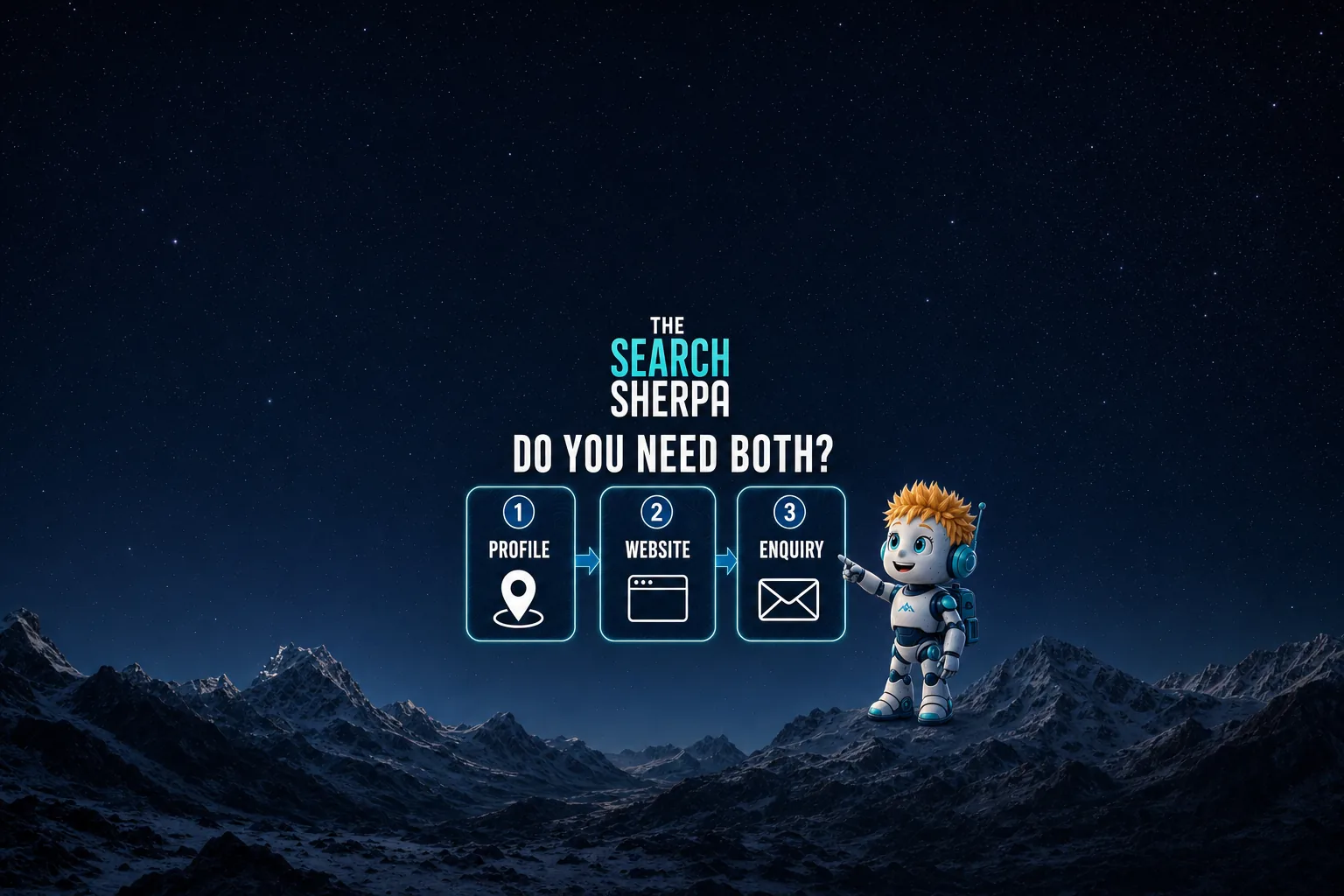
Do you need a website if you have a Google Business Profile?
No, not to show up on Google Maps and Search. Google lets you manage a Business Profile at no charge. Its guidelines ask for a phone number or a website for your location. You can appear on the map with no site at all.
Most businesses still benefit from a website once customers start comparing before they call. A profile is a listing on Google’s platform, with little room to explain and rules you do not set. A website is where you explain the work in your own words. The real question is how your customers choose you.
For most local service businesses, the profile comes first. This guide is about what comes next, and when a website is worth paying for.
What a Google Business Profile does well on its own
A complete profile does a lot of work for free. As of November 2026, Google’s help pages on what a profile can show and editing your profile list these features:
- Your hours, phone number, website, and location or service area
- Photos and videos of your business and your work
- Customer reviews, which you can reply to
- Posts for offers, updates, and events
- Services or a menu, where available (the menu editor is for food and drink businesses only)
- Links for online orders, reservations, or appointments, for some business categories
- Social media links, in select regions
For an urgent search, the profile often does the whole job. Someone locked out of their house taps the call button on the map. They may never open a website.
If the three terms still blur together, here is how SEO, local SEO and a Google Business Profile differ.
Where a profile alone runs out of room
A profile is a listing, not a page you own. Here is where its limits show, each one taken from Google’s own help pages as of November 2026.
You get 750 characters to describe the business
Google caps the business description at 750 characters and does not allow URLs or HTML in it. Its guidelines add that no links of any type are allowed there. That is enough for a summary. It is not enough to explain several services, how a job works, or who you are not a fit for.
Other people can change what it says
Google builds profiles from several sources. They include crawled web content, licensed data, and facts that users contribute. If those sources report that your details are wrong, Google may update your profile. When someone suggests an edit, Google may notify you and give you 4 days to accept or reject it. If you do not respond, Google may publish the edit when other public information supports it. Google names your business website as one example.
The profile is shared ground. Your website is the version you write.
It runs on Google’s rules
Google says it may suspend or disable Business Profiles that do not follow its guidelines. Following those guidelines matters for that reason. A business with only a profile has no other page of its own while an appeal runs.
Some businesses cannot have one at all
Google says a business can have a profile if customers can visit it, or if it travels to customers. Online-only businesses are not eligible, and Google points them to Google Ads instead. If that describes you, the answer is simple. You need a website.
What a website adds that a profile cannot
A website does not replace the profile. It handles the jobs a listing was never built for.
Room for customers who compare before they call
Not every customer is in a hurry. Someone planning a bigger job reads, compares, and checks whether you serve their town. A page for each main service can explain what is included and who it suits. It can list the areas you cover and what happens after an enquiry. That is hard to fit into a profile.
An enquiry path you control
A contact form, booking tool, or quote request on your site sends enquiries to your own inbox. You decide what to ask and how to follow up. Keep the accounts behind it in your own name.
A source Google reads when it builds your profile
Google lists your official website among the sources it uses for profiles. The suggested-edit rule above also names your business website as information Google may check. Google asks that your business name match how it appears on your storefront, website, and stationery. An accurate website helps keep the profile accurate.
Pages that AI search tools can link to
Google AI Overviews and AI Mode show links to supporting web pages. As of November 2026, Google’s guidance for site owners sets one rule for supporting links. The page must be indexed and eligible to show in Google Search with a snippet. It says no special optimization is needed beyond normal SEO best practices. It also tells site owners to keep their Business Profile information current.
OpenAI describes ChatGPT search as giving answers with links to relevant web sources. Its crawler documentation says site owners can allow OAI-SearchBot so their site can appear in those search results.
A website gives you pages that can meet those rules. Meeting them does not mean any tool will cite you, and no honest provider can promise that. Our guide to answer engine optimization for local businesses covers the rest.
Your own view in Google Search Console
As of November 2026, Google Search Central says the first website step is verifying ownership in Google Search Console. Google says Search Console then helps you understand and monitor how Google displays information about your site. That needs a website you own.
Is a profile enough for your business? A decision guide
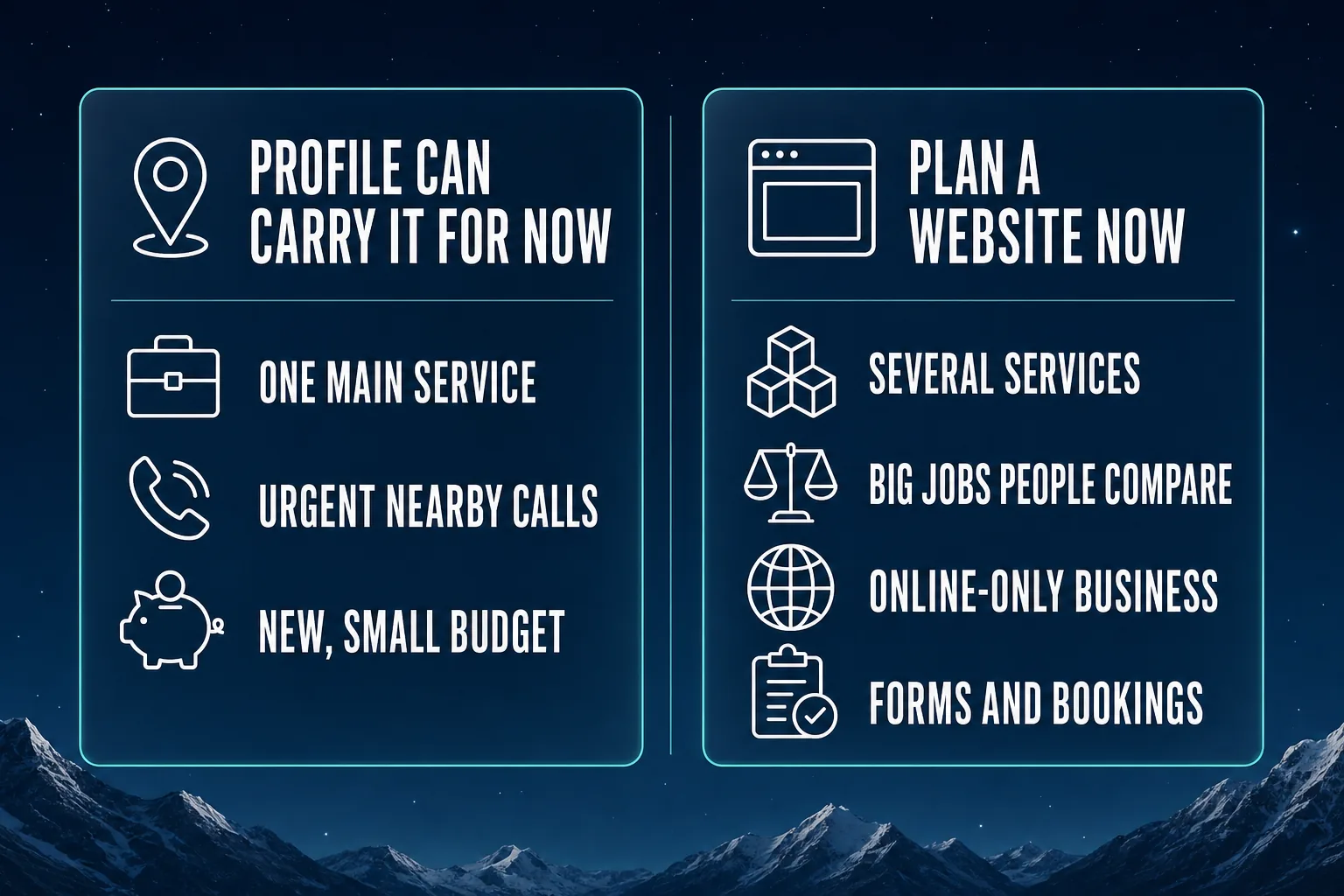
There is no single answer for every business. Use the table below as a starting point, then weigh your own customers and budget. This is our editorial guidance, not a rule from Google.
| Your situation | Can a profile carry you for now? | When to plan a website |
|---|---|---|
| One main service, and most calls come from urgent nearby searches | Yes | When you add services or want enquiries by form |
| A new business testing demand on a small budget | Yes, if the profile is complete | Once you know which services sell |
| Several services, or bigger jobs people compare first | No | Now |
| Work people want to understand before calling, such as health, legal, or financial services | No | Now |
| Serving many towns from one base | Rarely | Now, so each service and area is clear |
| An online-only business | Not eligible for a profile | Now |
| You want form, booking, or quote enquiries in your own system | Partly, through booking links in some categories | Now |
| You want pages that AI search tools can link to | No | Now |
Picture a hypothetical solo locksmith who works one town. Most calls come from people locked out right now, searching on a phone. A complete, accurate profile can carry that business for a while. A simple site can wait until the owner adds services, such as rekeying for landlords.
Now picture a hypothetical remodeling company that sells kitchen projects. Homeowners spend weeks reading, comparing photos, and checking who serves their area. That company needs service pages people can read before they ever call.
If the profile is enough for now, make it complete. Our Google Business Profile optimization checklist walks through each part. Not showing up at all? The cause may be elsewhere, so start with why a business may not be showing up on Google.
What a simple first website should include
A first website does not need to be large. It needs to be accurate, clear, and easy for Google to read. Start with these pieces:
- A home page that says what you do and where
- One page for each main service
- A contact page whose business name, phone, and address or service area match your profile
- An about page with the real people behind the business
- One clear way to enquire or book
- Settings that let Googlebot crawl the site, which Google asks for when you add a website to your profile
- The site verified in Google Search Console
- Your website address added to your Business Profile
A small, accurate site serves customers better than a large one nobody updates. If you want numbers, our guide to what a custom WordPress website costs breaks down the ranges. If you want help with the build, see our WordPress design and SEO service.
How your profile and your website support each other
The two are partners, not rivals. The profile sends people to your site through its website and booking links. The site gives Google an official source to check the profile against.
As of November 2026, Google says local results are mainly based on relevance, distance, and popularity. Its page explains that third factor as prominence. It draws on information such as how many websites link to your business and how many reviews you have. Google gives those as examples. It does not name having a website either way. Our view is practical: a website gives local partners, suppliers, and associations a page to link to.
Keep both saying the same thing about your name, services, hours, and service area. Then count what each one produces: calls, bookings, and enquiries. Our guide on how to track local SEO performance shows what to measure. If you would rather hand off the profile side, that is what Google Business Profile management covers.
Questions owners ask about websites and Business Profiles
Can I put my business on Google without a website?
Yes, if your business is eligible. Google asks for a phone number or a website, and managing a Business Profile costs nothing. Online-only businesses are not eligible for a profile, so they need a website.
Will not having a website hurt my position on Google Maps?
Not directly, as far as Google says. Its help page says local results are mainly based on relevance, distance, and popularity. It explains the third factor as prominence, drawing partly on links from other websites and on reviews. Google gives those as examples, so it neither names nor rules out having a website. A website helps people choose you once they find you.
Can I use my Facebook page instead of a website?
A Facebook page can share updates, but you do not control its layout or its rules. Google Search Console starts with verifying ownership of your own website, which a Facebook page is not. In select regions, the profile has its own social media links. Your Facebook page can sit next to a website rather than replace it.
Does my website need to match my Google Business Profile?
Yes. Google asks that your business name match how it appears on your storefront, website, and stationery. Google may also use your website to support edits that other people suggest to your profile.
Is a one-page website enough?
It can be a fine start for a business with one main service. Once you offer several services or serve several towns, separate pages give each one room to explain. Add pages as the business grows.
Not sure you need a website yet?
That is a fair question to ask before you spend anything. Tell us how customers find and choose you, and we will say plainly whether your profile is enough for now. The Search Sherpa is a founder-led SEO practice in Mokena, Illinois, and you work directly with Jeremy Bengtson. You can meet Jeremy Bengtson first.
Book a Free Discovery Call to talk through your profile, your website, and what your customers need.
Explore This Topic
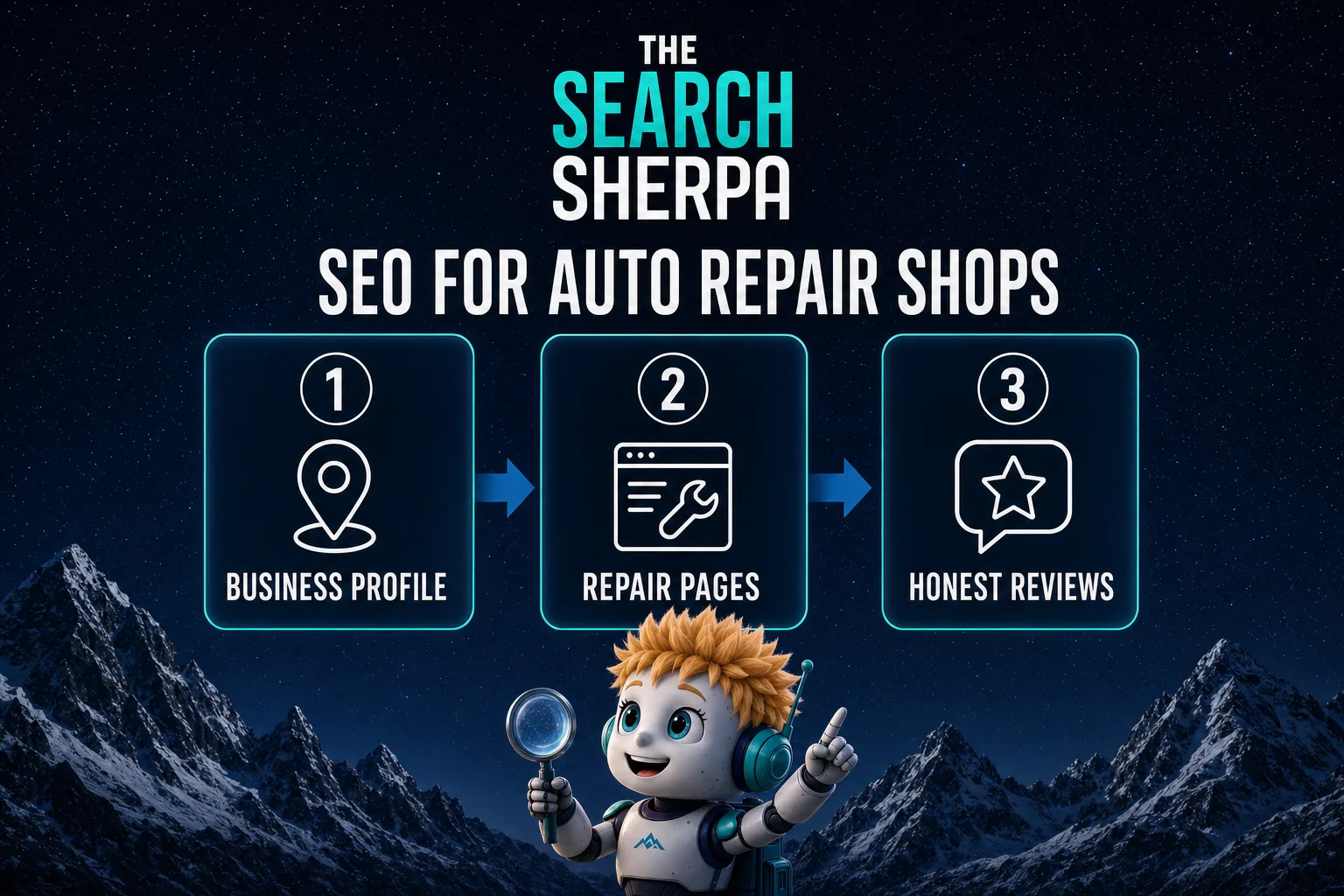
SEO for Auto Repair Shops (2026): How Independent Shops Get Found
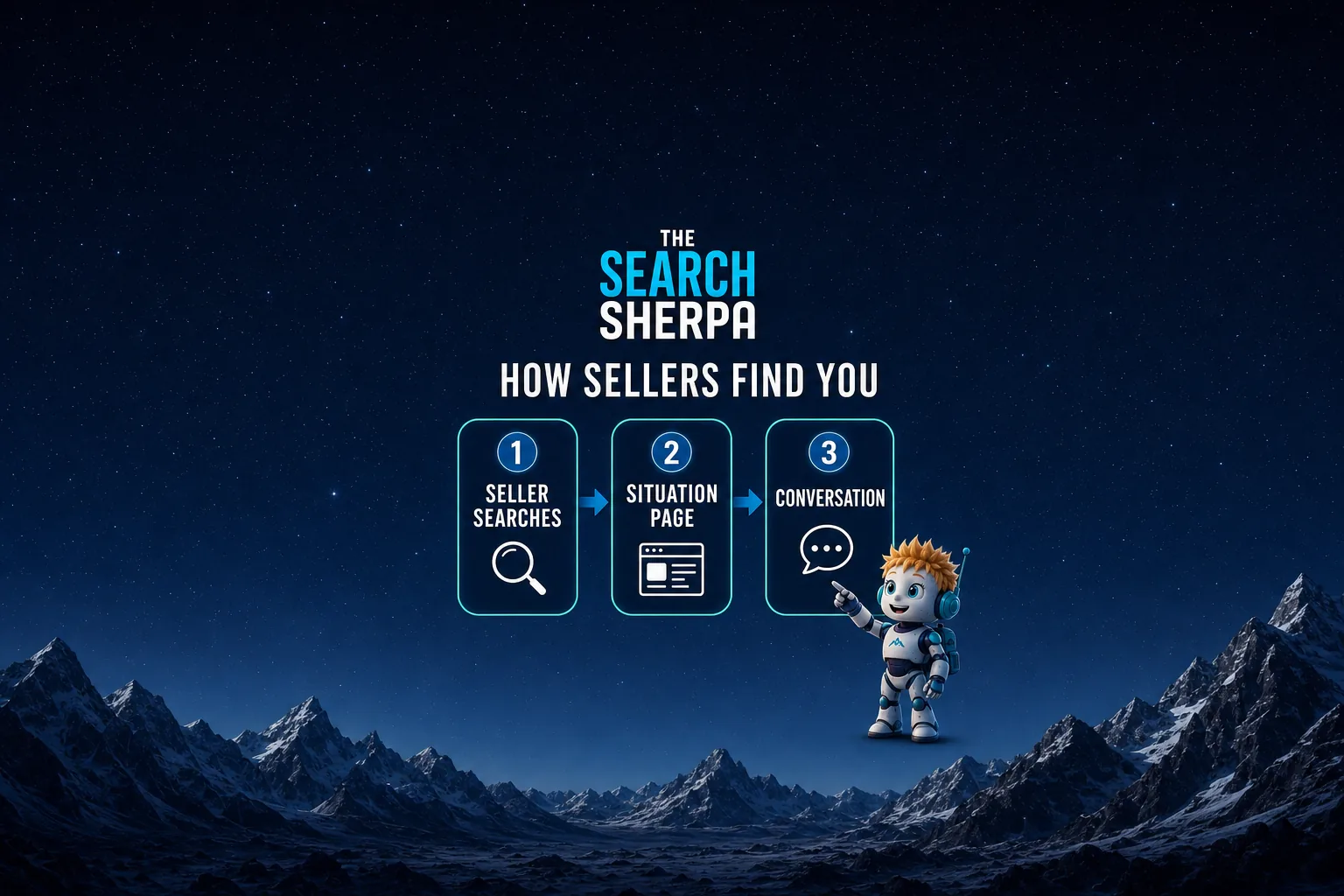
SEO for Real Estate Investors: How Motivated Sellers Find You
Vercel vs Netlify vs Cloudflare Pages: Which Free Plan Allows a Business Website?
Best Fonts for Medical and Healthcare Websites: Readable, Accessible, Licensed
Do You Still Need a Website If You Have a Google Business Profile?
Join Over 400,000 Entrepreneurs Getting Our Weekly Newsletter
Recent Posts
November 9, 2026
SEO for auto repair shops in 2026: Google Business Profile categories, repair pages, honest reviews, estimate and warranty copy, and what SEO costs.
November 8, 2026
SEO for real estate investors: build seller-situation pages, set up Google Business Profile within the rules, earn seller trust and track signed deals.
November 8, 2026
Vercel vs Netlify vs Cloudflare Pages for a business website: what each free plan’s terms say, what happens at the limit, and who