
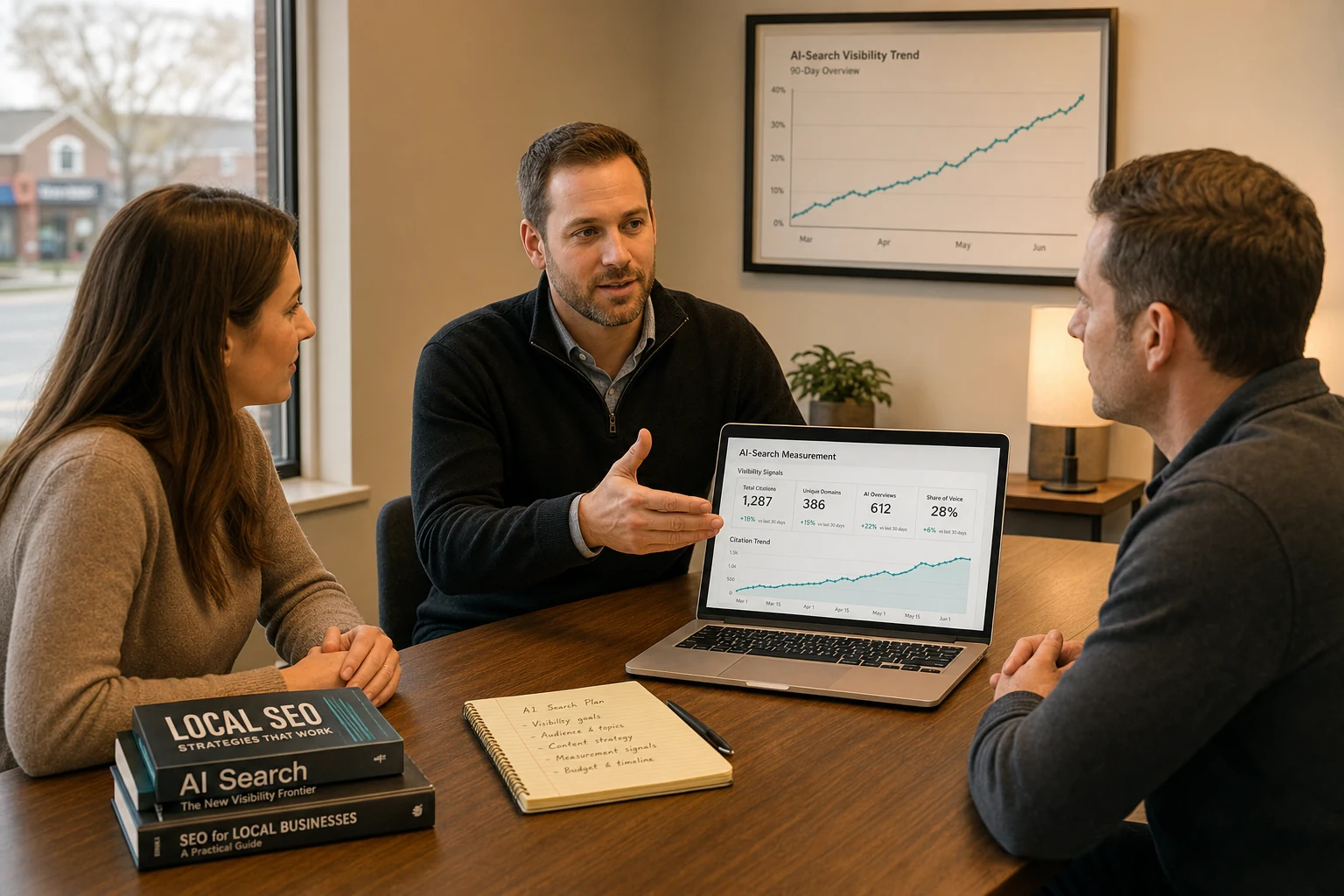
By Jeremy Bengtson, founder of The Search Sherpa.
Every week a local business owner asks me some version of the same two questions. What does it cost to get my business showing up in ChatGPT, Perplexity, and Google AI Overviews, and how would I even know if it is working? Both are fair questions, and most of the AI search industry answers neither one clearly. This guide does.
I am going to give you an honest range for what this work costs, walk through exactly what a 90-day scope includes, and then spend real time on the part almost nobody explains: how to measure AI search results so you can tell whether your money is doing anything. No hype, no jargon, and no promises I cannot keep.
What does AI search optimization cost?
For most local businesses, AI search optimization costs between about 1,000 and 3,000 dollars a month when it is folded into a local SEO retainer, or it can start as a one-time project in the low thousands. There is no single flat rate, because the price depends on your website, your competition, and how much groundwork already exists.
AI search optimization is not usually a separate bill. For a local business it is the same foundation work that improves your Google and local rankings, aimed at a new set of AI readers. That is why honest pricing looks like a monthly range and a clear scope, not a magic number.
Here is how that lines up with how we already price everything, which you can see on our SEO pricing page. Local businesses typically sit in the 1,000 to 3,000 dollar per month range for the connected work that includes Google Business Profile, local content, technical structure, and AI search readiness. If you would rather test the water first, we also offer a one-time Custom SEO Roadmap in the low thousands that includes an AI search assessment, and the fee is credited toward a retainer if you continue.
Two things to watch for when you compare prices. First, be cautious of any provider that hides pricing entirely and only reveals it after a sales call. Second, be equally cautious of a cheap add-on that promises to get you into AI answers for a flat 199 dollars a month, because the real work is the foundation, and the foundation is not cheap to fake.
What you are actually paying for: GEO, AEO, and SEO
You may see the work sold under a few different names. Generative Engine Optimization, or GEO, and Answer Engine Optimization, or AEO, both describe the same core idea: making your business easy for AI answer engines to find, understand, and quote. Search engine optimization, or SEO, is the older discipline they build on.
The important thing to understand before you pay for anything is that these are not three separate purchases. An honest generative engine optimization service is mostly the same foundation work as good local SEO, pointed at ChatGPT, Perplexity, Gemini, and Google AI Overviews as well as at Google’s blue links. When a GEO agency quotes you a price, you are paying for clear site structure, schema markup, trustworthy content, consistent local listings, and the monitoring that tells you how the AI engines are treating you.
If you want the deeper explanation of the service itself, our AI search optimization page walks through it, and our guide to answer engine optimization for local businesses covers the AEO side in plain terms. The naming is marketing. The work underneath is what you are actually buying.
What a 90-day AI search scope includes
A fair way to judge a price is to look at the scope behind it. Here is what a typical first 90 days of AI search work looks like for a local business. Your plan may shift based on what your site already has, but this is the honest shape of it.
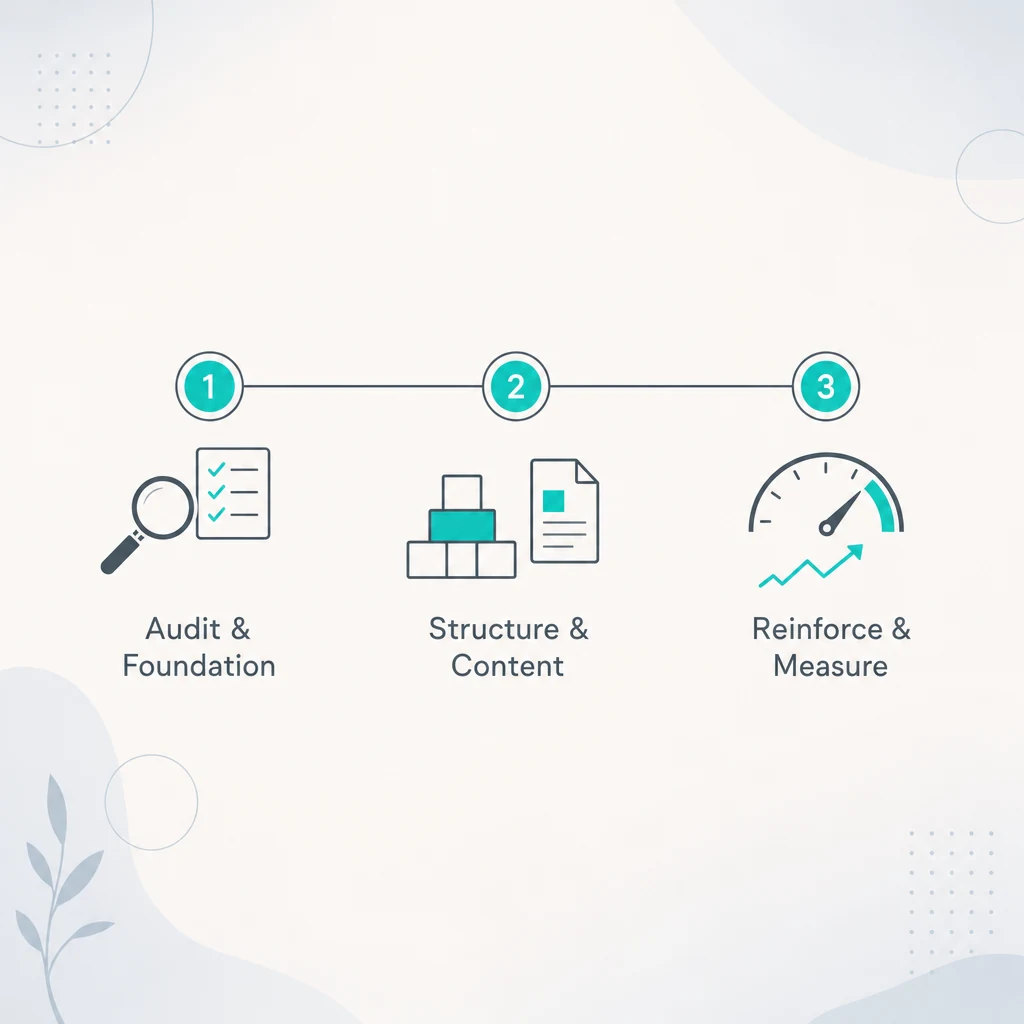
Days 1 to 30: audit and foundation
The first month is about seeing clearly and fixing what is broken. That means an AI search visibility audit, a technical and speed check of your site, a full review of your Google Business Profile, competitor analysis to see who the AI engines currently cite in your market, and a priority list of the questions your customers actually ask. We also set the baseline measurements described below, because you cannot show progress from a number you never recorded.
Days 31 to 60: structure and content
The second month is where the fixes ship. We clean up page structure so each important page has one clear headline and direct answers, add schema markup so engines understand who you are and what you offer, tighten your Google Business Profile and local listings, and publish or rewrite the pages that answer your highest-value questions. This is the phase that gives AI engines something clear and factual to quote.
Days 61 to 90: reinforce and measure
The third month connects everything and checks the scoreboard. We reinforce your entity signals across the web, keep listings consistent, refresh key pages, and pull the first real measurement report against the baseline from month one. Ninety days is usually enough to see early movement in the measurements below, though meaningful, durable results tend to compound over three to six months and beyond.
How we measure AI search results
This is the part the industry avoids, so it is the part I want to be most concrete about. The single biggest objection I hear about AI search is a good one: if a customer gets their answer inside ChatGPT and never clicks, how would you ever know it worked? The answer is that you measure five specific things, and none of them require you to take anyone’s word for it.
We measure AI search with five signals: a fixed priority query set, whether your business is cited across ChatGPT, Perplexity, Google AI Overviews, and Gemini, qualified calls and form fills, branded search growth, and Google Business Profile actions. Together they show whether AI is sending you real customers, not just impressions.
1. A fixed priority query set
We start by agreeing on a set of real questions your customers ask, the ones tied to money, like “best med spa near me” or “emergency plumber in New Lenox.” That list is fixed at the start so we are measuring the same questions every month, not moving the goalposts. It is the backbone of everything else.
2. Cited-versus-not tracking across the major engines
For each question in that set, we check whether your business is named in the answer across ChatGPT, Perplexity, Google AI Overviews, and Gemini, and we record it over time. This is where AI-mention trackers like Otterly and Profound earn their place, because Google Search Console will not tell you what ChatGPT said about you. The output is simple: for each priority question, are you cited, on which engines, and is that trend rising or falling. For more on the tools behind this, see our guide to AI search tools for local businesses.
3. Qualified calls and form fills
Citations are the leading indicator. Calls and forms are the point. We use call tracking and form tracking so that when someone reaches out, we can see the path they took, including the growing share who found you through an AI answer and then searched your name to call. This is the number that actually pays your bills, so it carries the most weight in every report.
4. Branded search growth
When AI engines start recommending you, a predictable thing happens: more people search your business name directly to verify you and get your number. We watch branded search volume in Google Search Console because a steady rise in people looking you up by name is one of the clearest honest signals that AI exposure is turning into real interest.
5. Google Business Profile actions
For a local business, your Google Business Profile is the scoreboard that never lies. We track calls, direction requests, website clicks, and messages from your profile, because AI-driven local answers increasingly send people straight there. If profile actions are climbing alongside your citation trend, the story hangs together. Our Google Business Profile optimization work feeds this directly, and our Google Business Profile management service keeps it active.
Put those five together and you get an honest picture. You can see whether AI engines are citing you more, whether that is lifting branded search and profile activity, and whether it is ending in calls and forms. That is measurement, not vibes. I want to be clear about one thing though: rising citations and rising calls are not the same as a promised outcome, and I explain that limit near the end of this guide.
Is GEO worth it for a local business?
For most local businesses, GEO is worth it as part of your existing SEO budget, not as an expensive separate line item. The reason is that the behavior it targets is already large and still growing, and the foundation work pays off in Google and AI search at the same time.

Consider the shift. In its 2026 study, SparkToro found that less than one third of United States Google searches now end in a click to the open web, meaning most searches are answered on the results page itself (SparkToro, 2026). Google AI Overviews are a big part of that, appearing on roughly 13 percent of United States desktop searches in early 2025 and rising through the year, according to a Semrush and Datos analysis of more than 10 million keywords (Search Engine Land, 2025).
And the traffic AI does send is real and growing fast. Similarweb reported that AI platforms generated over 1.13 billion referral visits in June 2025, up 357 percent from the year before, with ChatGPT driving more than 80 percent of AI referrals to the top sites it studied (Similarweb, 2025). So the question is not really whether AI search matters. It is whether the work is priced honestly and measured properly, which is the whole point of this guide.
How honest pricing compares to the typical GEO agency
We publish the same math by vertical, including med spa AI search optimization cost for aesthetic clinics that want the numbers in patient terms rather than agency terms.
When I read through the pages of the newer GEO and AEO specialist agencies, two patterns show up again and again. Most of them will not publish a price at all, and most of them describe measurement in words like “we track what every engine says about you” without ever showing you the actual signals or how you would verify them yourself.
You can beat that low bar by asking two direct questions of anyone you consider, including me. What is the range this will cost and what does it include, and what are the specific numbers you will report each month. If the answer to either one is vague, keep looking. Concrete pricing and concrete measurement are not too much to ask, and they are the fastest way to tell a real operator from a good sales pitch. If you want the fundamentals of the local work underneath all of this, our local SEO page is a plain-English place to start. If you run a trade business, the same cost math by trade is in our contractor SEO cost hub, with breakdowns for roofing, HVAC, and plumbing. If you sell real estate, the same math is in our guide to real estate SEO pricing by agent and brokerage size.
I want to be plain about what I can and cannot promise, because that is how we work. We do not promise rankings, lead counts, or AI citations, because no honest provider can control what ChatGPT, Perplexity, or Google decide to show. AI helps us work faster, and the measurement above helps us see clearly, but neither one guarantees a placement, and anyone who tells you otherwise should worry you. What I can do is quote an honest range, ship a clear scope, and report real numbers so you always know where your money went.
Frequently asked questions
How much does AI search optimization cost?
For most local businesses, AI search optimization costs about $1,000 to $3,000 a month inside a local SEO retainer, per The Search Sherpa’s published SEO pricing. National 2026 guides cited in Google’s AI Overview (Stridec, Fuel Online) quote $2,000 to $15,000 or more monthly for agency retainers. Price depends on your site and competition.
More detail: Many businesses start with a one-time project instead: The Search Sherpa’s $2,000 Custom SEO Roadmap includes an AI search visibility assessment and is credited toward the first retainer month if you continue. Be cautious of providers that hide pricing, or that promise AI placement for a cheap flat add-on fee. Vertical guides apply the same ranges to one kind of business. Related: real estate SEO pricing by brokerage size
How much does AI search optimization software typically cost?
AI visibility tracking software runs about $29 to $500 or more a month, per 2026 tool roundups cited in Google’s AI Overview (Zapier). Semrush’s AI search plans start around $117 a month billed annually. Software only reports whether ChatGPT, Perplexity, or Google AI Overviews cite you; it does not do the work that earns citations.
More detail: WordPress plugins such as AIOSEO list $49.50 to $299.50 a year for AI writing credits, per the same AI Overview. Trackers like Otterly and Profound are useful for the cited-or-not check described in the measurement section of this guide. Related: AI visibility tracking tools compared
Is AI search optimization billed separately from SEO?
Usually not. Generative engine optimization (GEO) and answer engine optimization (AEO) reuse the same foundation as SEO: clear site structure, schema markup, trustworthy content, and consistent listings. The Search Sherpa’s SEO pricing page builds GEO into every retainer rather than adding a line item, so most local businesses fund it from existing SEO budgets.
More detail: If a provider quotes SEO, AEO, and GEO as three bills, ask which tasks actually differ. Most of the work overlaps, so the honest move is reallocating part of an existing budget toward structure and answer-first content rather than adding a new one. Related: how to adjust your SEO budget
What is generative engine optimization (GEO)?
Generative engine optimization (GEO) is the work of making your business easy for AI answer engines such as ChatGPT, Perplexity, Gemini, and Google AI Overviews to find, understand, and quote. It overlaps heavily with answer engine optimization (AEO) and traditional SEO: the same clear, trustworthy foundation, aimed at AI readers as well as search results.
More detail: Entity signals, meaning consistent facts about who you are and what you offer across the web, are a large part of why one business gets quoted and another does not. Related: brand entity optimization for AI search
How do you measure AI search results?
AI search results are measured with five signals: a fixed set of priority customer questions, whether your business is cited for them across ChatGPT, Perplexity, Google AI Overviews, and Gemini, qualified calls and form fills, branded search growth in Google Search Console, and Google Business Profile actions. Tracking all five lets you verify progress yourself.
More detail: Google Search Console does not show what ChatGPT said about you, so AI-mention trackers such as Otterly or Profound fill that gap, while call and form tracking connects citations to real inquiries. Rising citations are a trend to watch, not a promised outcome. Related: tracking local SEO performance
Is AI search optimization worth it for a local business?
For most local businesses, yes, when it is funded from the existing SEO budget rather than as a separate line item. SparkToro’s 2026 study found less than one third of US Google searches end in a click to the open web, so being the quoted answer matters more each year. Results still vary by market.
More detail: Similarweb reported AI platforms sent over 1.13 billion referral visits in June 2025, up 357 percent year over year. AI Overviews appeared on roughly 13 percent of United States desktop searches in early 2025, per a Semrush and Datos analysis reported by Search Engine Land. Related: is AI search optimization worth it
How long does AI search optimization take to work?
Early movement in AI citations and Google Business Profile activity often shows within the first 90 days, but most local SEO shows measurable movement in about three to six months, depending on competition and the condition of your site. Anyone promising AI citations in 30 days cannot control the outcome.
More detail: Durable results tend to keep compounding beyond six months as entity signals, reviews, and answer-first pages accumulate. Timelines run longer in highly competitive trades. Related: roofing SEO timelines and cost
Can you guarantee my business will show up in ChatGPT or AI Overviews?
No, and be cautious of anyone who does. No provider controls what ChatGPT, Perplexity, Gemini, or Google AI Overviews decide to show, so honest providers do not promise rankings, lead counts, or AI citations. What a provider can do is build the foundation that makes you easier to cite and report real numbers each month.
More detail: A useful test when comparing providers: ask what the range costs, what it includes, and which specific numbers they will report monthly. A vague answer to either is the warning sign. Related: how to choose a local SEO provider
What is the cost per acquisition for AI search?
No standard industry benchmark exists yet for AI search cost per acquisition, so calculate your own: divide monthly AI search spend by the new customers who arrived through AI-referred visits, branded searches, or Google Business Profile calls that month. Track it monthly, because it should fall as citations and reviews compound. Attribution is never perfect.
More detail: Many customers see you in an AI answer, then search your name and call, so branded search and profile calls are the practical proxy. Vertical pages on this site work the same math in their own units. Related: dental SEO cost per new patient
If your business is ready to become easier to find, easier to understand, and easier to choose across Google and AI search, we can help you build and measure the visibility system behind it. Start with a conversation. We will look at where you stand and what comes next. You can work with Jeremy or request a free website and SEO review any time. You can also call us at (217) 579-8791.
Explore This Topic

Claude Code Overwriting Changes: How to Manage Conflicting Sessions

Watch: Claude Code Keeps Undoing My Edits
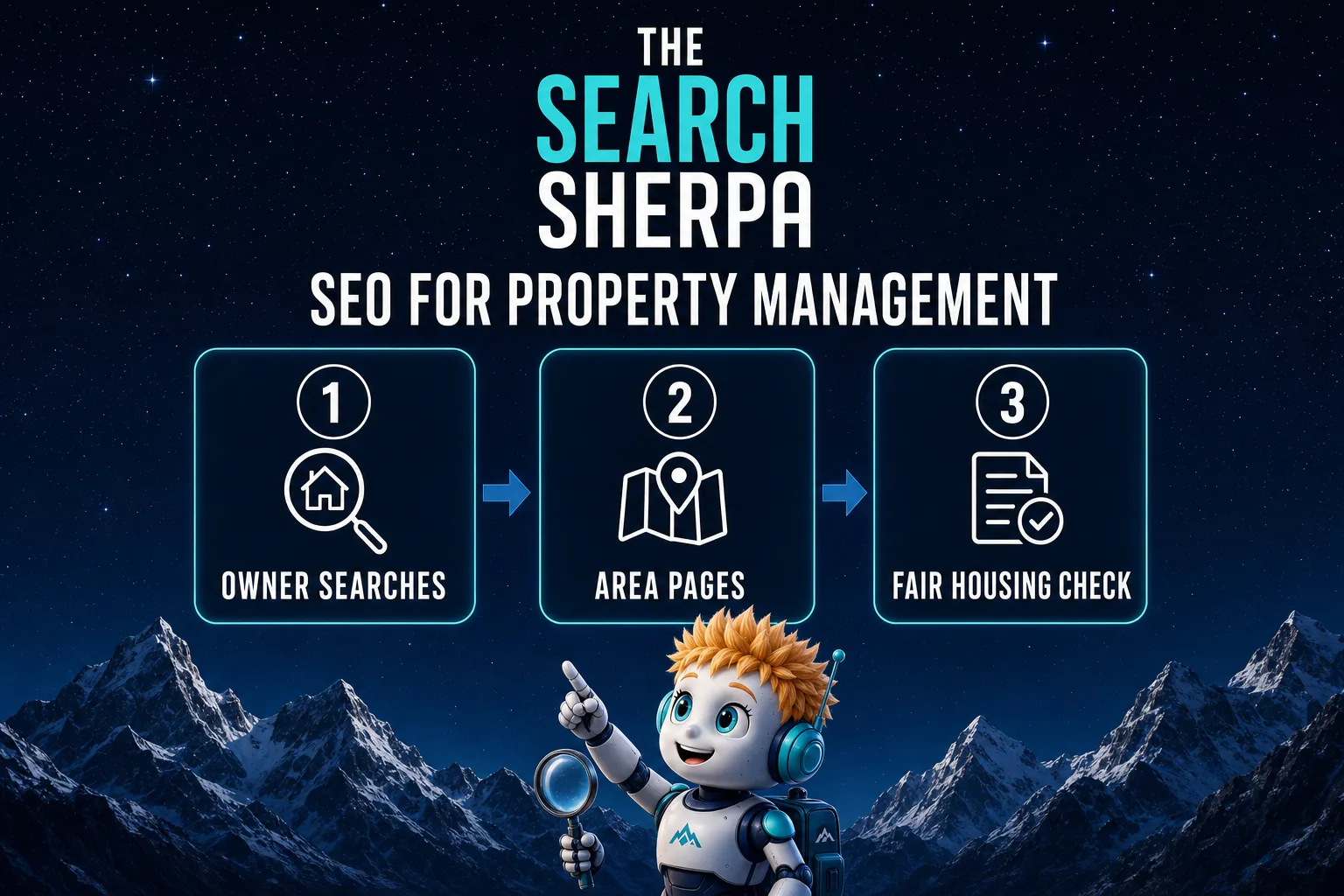
SEO for Property Management (2026): How Managers Get Found by Owners
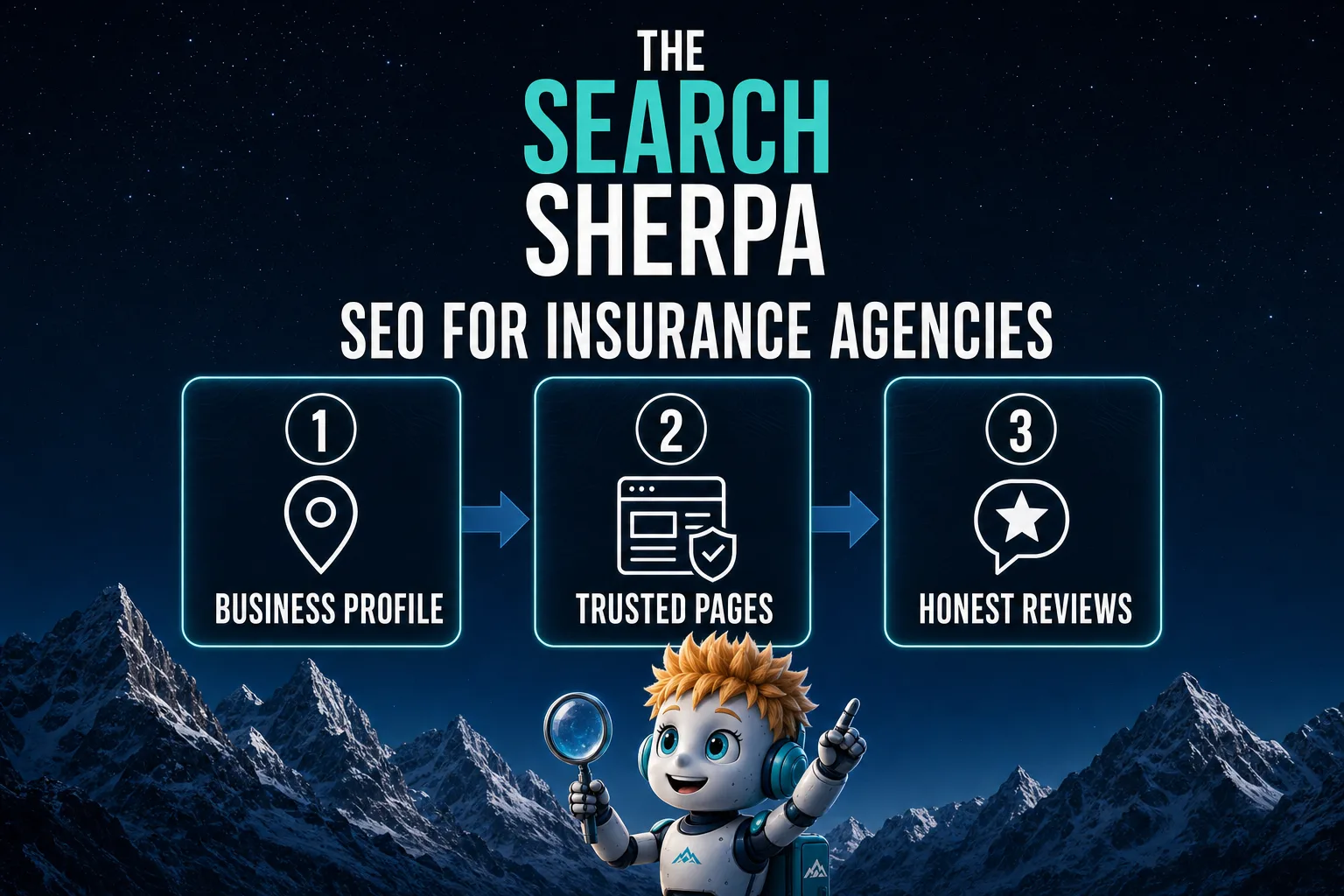
SEO for Insurance Agencies (2026): How Local Agents Get Found

Hiring an AI Website Developer: What YouTube Videos Cannot Prove
Join Over 400,000 Entrepreneurs Getting Our Weekly Newsletter
Recent Posts
October 24, 2026
Diagnose why Claude Code changes disappear, preserve your work, and coordinate coding sessions with clear ownership, separate checkouts, and a reviewed handoff.
October 24, 2026
Alyssa changes a headline. Five forgotten Claude Code sessions have other plans. Watch Ghost in the Shells, an animated comedy about conflicting AI
October 12, 2026
A YouTube demo shows only part of a provider’s work. Learn what to verify about AI review, access, backups, testing, ownership, and support